- 2B / BW Shalimar Bagh, Opp. BQ Market, Near DLF Mall New Delhi - 110088, India.
- :+91-9312-871-070

Manufacturers, Exporters, Suppliers of High Performance Powder Antiscalant
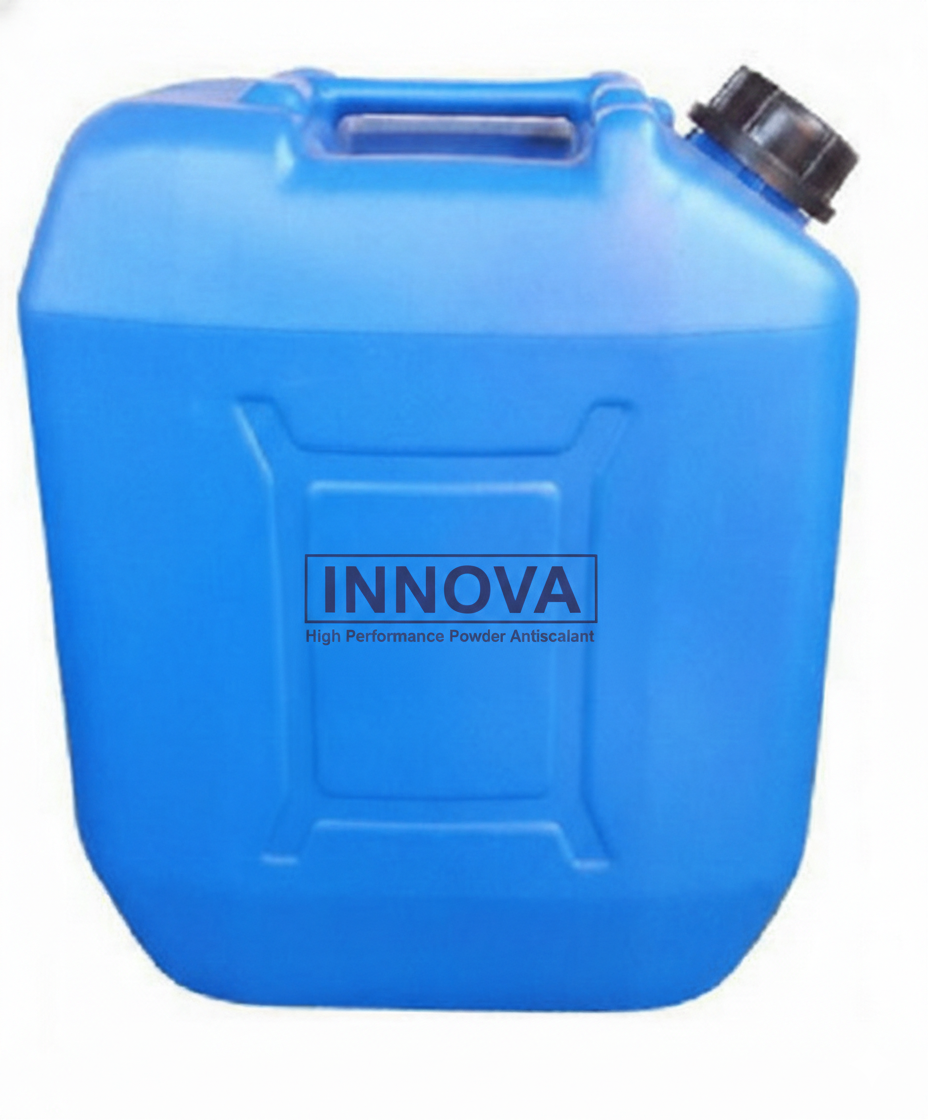
Powder RO Antiscalant for Madhya Pradesh (Concentrated Formula)
Powder antiscalant is not just liquid antiscalant in a different form. It is a different way of running membrane protection — and for a specific set of MP plants, it is the more practical choice. Consider a mid-sized unit in Pithampur or Mandideep running a 20 KLD RO system. It does not have a dedicated chemical dosing room. It does not have storage space for 200-litre drums. It does not want to deal with liquid spills, freezing issues in December, or transport costs from outside the state. What it needs is a concentrated powder that dissolves in permeate, doses through a simple metering pump, and takes up almost no storage space. That is the use case this product is built for.
The chemistry behind the powder is the same family of threshold inhibitors used in liquid formulations, but at a much higher active concentration. That means lower dosage per cubic metre of feed water, longer shelf life, and no risk of product degradation in storage. For MP plants drawing from the Malwa plateau borewells around Indore, Ujjain and Dewas — where hardness and TDS are consistently high — the powder form gives precise control over feedwater chemistry without the handling overhead of liquid chemicals. It works effectively against calcium carbonate, sulphate scales and moderate silica, keeping membranes clean and stable across the operating cycle.
Where Powder Makes More Sense Than Liquid in MP: For large industrial plants running continuous high-volume RO, liquid antiscalant is usually the better choice — easier to dose automatically, simpler to monitor. But for small and medium units, remote sites, seasonal operations, and plants with limited storage or handling capacity, powder wins on practicality. MP has a large number of such plants — food processing units in the Malwa belt, textile and engineering workshops around Indore and Bhopal, and standalone water treatment setups in industrial estates. This product is designed for them.
Why MP Plants Choose Powder Antiscalant:
- Lower Dosage Per Treated Litre: Concentrated powder works at lower ppm than standard liquids, reducing chemical consumption for the same protection.
- Compact Storage: No 200-litre drums taking up floor space — ideal for MP units with limited storage capacity.
- Winter-Safe: No freezing or crystallisation issues during MP's cold winter months, unlike some liquid formulations.
- Longer Shelf Life: Powder remains stable for much longer than liquid — better for plants that keep buffer stock on site.
- Lower Transport Cost: Concentrated powder is lighter and cheaper to ship than liquid to any MP location, including remote industrial areas.
- Rapid Dissolution: Dissolves quickly in permeate or soft water to make a stock solution for immediate dosing.
- Broad Membrane Compatibility: Safe with polyamide, TFC and cellulose acetate membranes used across MP industrial RO systems.
Dosage & Application: Dissolve the powder in permeate or soft water to prepare a stock solution, then inject continuously into the RO feed line downstream of pretreatment and upstream of the cartridge filter. Typical working concentration in the feed water is 2 to 6 ppm, set by feed hardness, TDS and silica. For MP's Malwa plateau borewell water and industrial sources in Pithampur and Mandideep, the upper end of the range is usually needed. We recommend a feed water analysis before finalising the dose for your plant.
Storage & Handling: Keep the powder in its original moisture-proof packaging, stored in a cool, dry area at your MP site. Once opened, reseal tightly after each use to prevent moisture absorption. Full handling procedures, dilution ratios and safety data are covered in the Material Safety Data Sheet (MSDS) and Technical Data Sheet (TDS).