- 2B / BW Shalimar Bagh, Opp. BQ Market, Near DLF Mall New Delhi - 110088, India.
- :+91-9312-871-070

Manufacturers, Exporters, Suppliers of RO Membrane Preservative
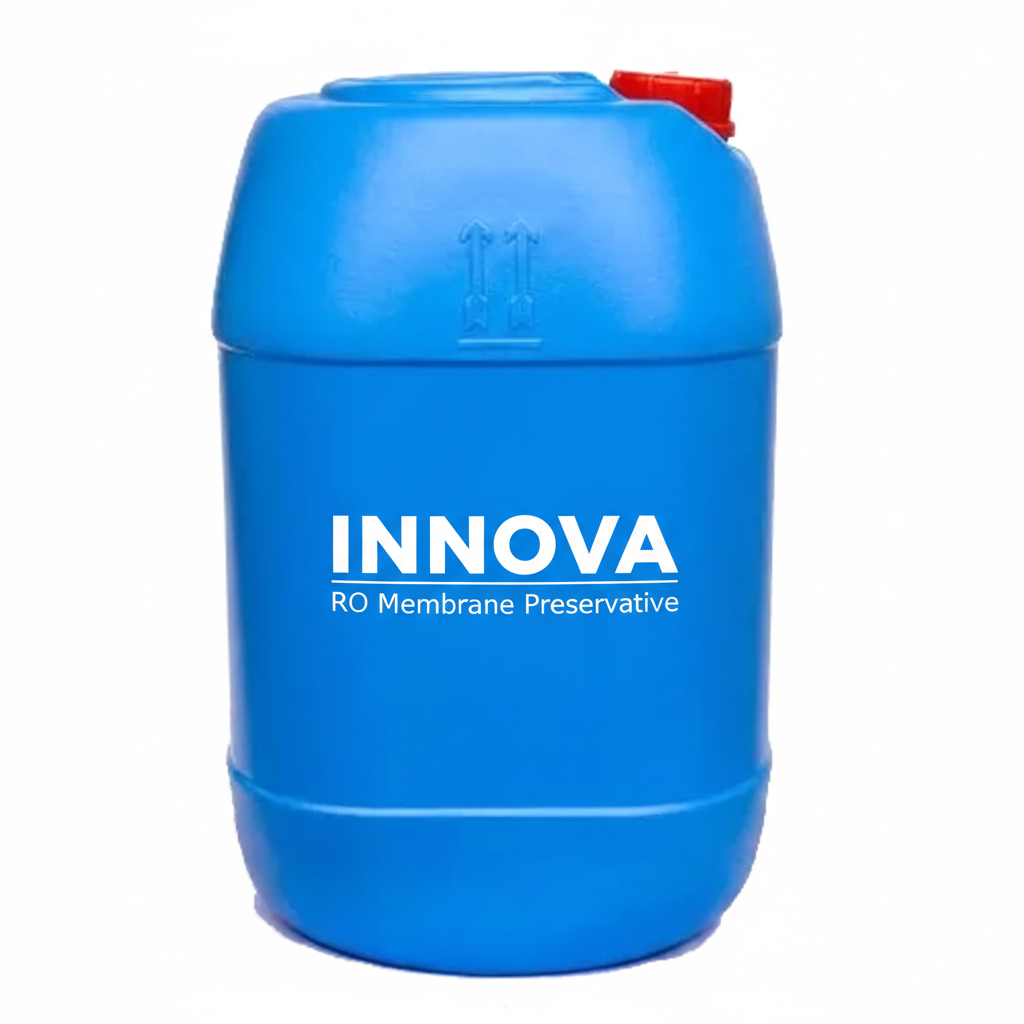
RO Membrane Preservative for Bangladesh Plants (BSTI & DoE Compliant Shutdown Protection)
Bangladesh's industrial RO plants face a preservation challenge specific to the country's climate and business cycle. The June to October monsoon season brings production slowdowns across Dhaka's textile belt, Narayanganj's garment processing facilities, and Chittagong's ship-breaking yards — leaving RO systems idle for weeks. Eid-ul-Fitr and Eid-ul-Azha bring nationwide factory shutdowns that idle membranes for 5 to 10 days at a stretch. Pharmaceutical plants in Dhaka undergo BSTI-mandated maintenance shutdowns. Leather processing facilities in Hazaribagh operate on a seasonal cycle around Eid-ul-Azha, with peak processing followed by extended downtime. And municipal water utilities across Dhaka, Khulna, and Rajshahi face arsenic remediation shutdowns that require temporary system isolation. Innova Corporate (India) supplies this RO membrane preservative for Bangladesh plants specifically for these shutdown patterns, and the product is compliant with BSTI (Bangladesh Standards and Testing Institution) requirements and DoE (Department of Environment) discharge regulations.
When RO systems are offline for more than 48 hours, membranes are at high risk of biological growth and dehydration. In Bangladesh's 20°C to 35°C year-round temperatures and high monsoon humidity, biofilm can form on unprotected membranes within 3 to 5 days — faster than in cooler or drier climates. Our preservative is specially formulated to maintain membrane health during these conditions, acting as a protective shield that prevents bacterial and fungal growth within membrane elements. It ensures that polyamide or TFC layers remain moist and biologically inactive, allowing for a smooth and efficient system restart in your Bangladesh facility without loss of performance or flux. On restart, water quality parameters return to normal within hours, and BSTI-mandated water quality testing is passed without additional CIP cycles.
For Bangladesh specifically, the preservation window differs from temperate climates. During the dry season (November to May), RO membranes can be safely stored for up to 4 months with our preservative solution. During the monsoon season (June to October) when humidity and temperature peak, the window shortens to 2 to 3 months before solution replacement is recommended — because heat and humidity accelerate both chemical degradation and biological regrowth. This seasonal approach matches Bangladesh's actual production cycles and shutdown patterns, so plants in Dhaka and Narayanganj only replace preservative when it is genuinely needed.
Key Features & Strategic Benefits for Bangladesh Industries:
- BSTI & DoE Compliant: Formulated to meet Bangladesh Standards and Testing Institution requirements and Department of Environment discharge regulations — documentation support available for facility audits and environmental reporting.
- Monsoon-Optimised Preservation: Biostatic formula effective in Bangladesh's 20°C to 35°C humid conditions — preventing biofilm during 2 to 3 month monsoon-season storage.
- Eid Shutdown Compatible: Tested for Bangladesh's 5 to 10 day Eid-ul-Fitr and Eid-ul-Azha shutdowns — membranes restart at design performance with no additional CIP required.
- Leather Seasonal Cycle Support: Suitable for Hazaribagh leather processing facilities that operate around Eid-ul-Azha — preserving membranes through extended seasonal downtime.
- Membrane Moisture Retention: Keeps polyamide and TFC layers fully wet during storage — preventing the permanent performance loss that occurs when membranes dry out.
- Seasonal Replacement Schedule: 4 months dry season, 2 to 3 months monsoon — tailored to Bangladesh's actual climate rather than generic global guidance.
- Full Membrane Compatibility: Safe for polyamide, TFC, cellulose acetate, and NF membranes, plus standard housings, gaskets, O-rings, and CIP skid components used in Bangladesh plants.
- Clean Restart: Membranes return to previous flux and salt rejection after restart — BSTI water quality testing passed without additional cleaning.
- Logistics-Friendly for Bangladesh: Stable liquid concentrate in sealed containers — safe for transport to Dhaka, Narayanganj, Gazipur, Khulna, Rajshahi, and Chittagong with full customs documentation.
Application & Dosage for Bangladesh Plants:
The application method involves displacing the feed water in the membrane elements with a prepared preservative solution, using a low-pressure recirculation or soak-fill procedure. Correct dilution ratio, contact time, and storage temperature depend on your shutdown duration, membrane model, and system size. Since these vary widely across Bangladesh industrial installations — from 5-day Eid shutdowns at Dhaka textile plants to 8-week monsoon-season slowdowns at Chittagong ship-breaking yards — please contact our Bangladesh representative for a plant-specific preservation protocol. We provide this guidance free of cost based on your shutdown schedule, season, and membrane specifications.
Handling Measures & Safety Precautions:
Proper human safety gear such as splash goggles, lab coats, vapour
respirators, gloves, and boots must be worn while handling and applying
chemicals at your Bangladesh site.
* Skin Contact: Wash off with water immediately.
* Eye Contact: Flush with fresh water and seek medical attention
immediately.
* Important: Product should not be injected. Please refer to the
MSDS for comprehensive safety details and BSTI-required handling
protocols.
Recommended Applications in Bangladesh: Textile dyeing and garment processing in Dhaka, Narayanganj, and Gazipur during Eid and monsoon-season shutdowns; pharmaceutical manufacturing in Dhaka during BSTI-mandated maintenance shutdowns; food processing and beverage bottling in Dhaka and Chittagong during seasonal production gaps; leather processing in Hazaribagh during Eid-ul-Azha seasonal cycles; ship-breaking facility water systems in Chittagong during monsoon tide-schedule downtime; and municipal water utilities in Dhaka, Khulna, and Rajshahi during arsenic remediation shutdowns.
Storage: This product should be stored in original containers in a cool and dry place at your Bangladesh facility, away from sources of heat, flame, and direct sunlight. During monsoon season, keep containers off damp floors and away from condensation to prevent contamination. Refer to the Technical Data Sheet (TDS) and product label for shelf-life information — both compliant with Bangladesh regulatory documentation requirements.
Export & Technical Support for Bangladesh: We ship regularly to the Port of Chittagong, Bangladesh's largest port, and Mongla Port, with onward transport to Dhaka, Narayanganj, Gazipur, Khulna, Rajshahi, and other industrial cities across Bangladesh. All shipments include complete customs documentation, MSDS, and TDS. Our technical team provides free preservation protocol guidance — including pre-shutdown cleaning, correct dilution ratio, storage temperature requirements, and restart flushing procedure — tailored to your membrane model, shutdown duration, and BSTI/DoE regulatory requirements.