- 2B / BW Shalimar Bagh, Opp. BQ Market, Near DLF Mall New Delhi - 110088, India.
- :+91-9312-871-070

Manufacturers, Exporters, Suppliers of High Performance Powder Antiscalant
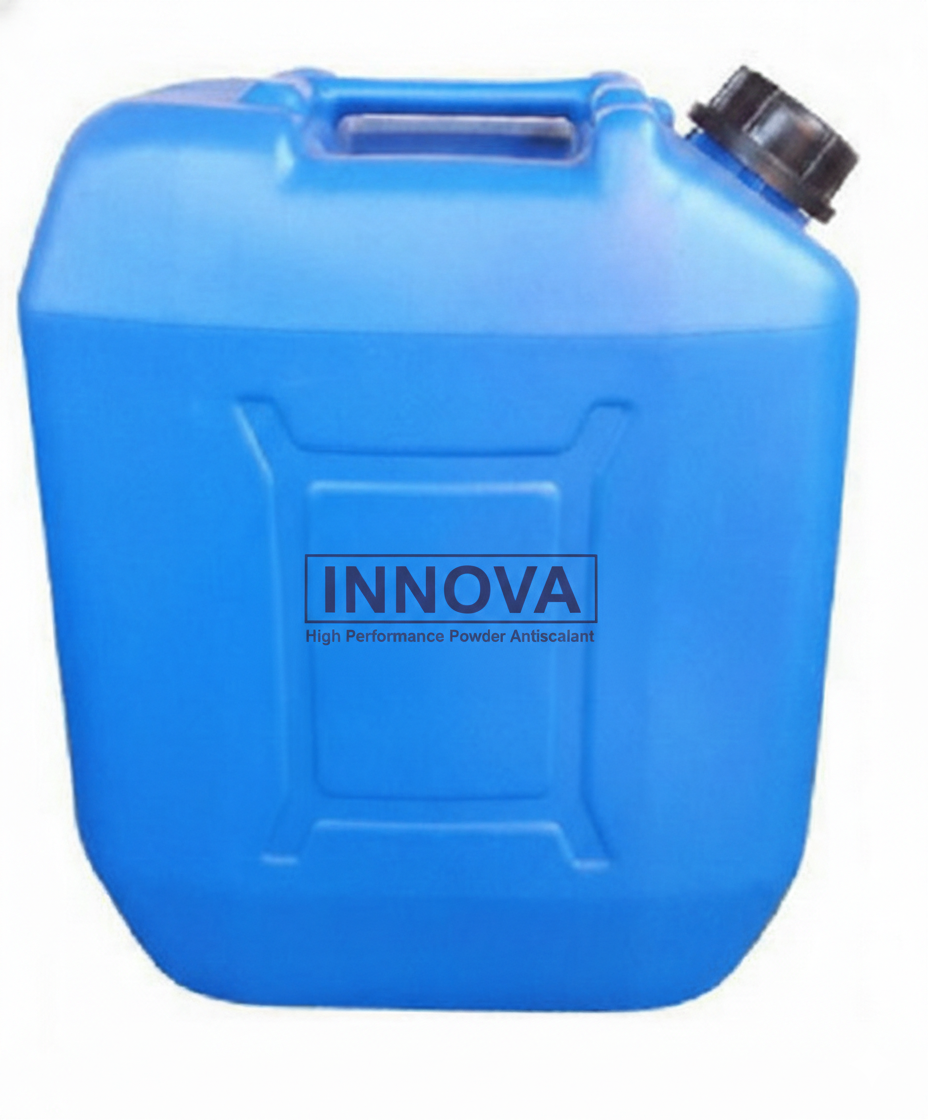
High Silica Powder Antiscalant in Bhutan for Glacial Melt, Cement & Geothermal RO (Reactive Silica Inhibitor)
Innova Corporate (India) supplies High Silica Powder Antiscalant in Bhutan for four distinct silica sources — Thimphu and Chukha hydropower cooling water from Himalayan glacial melt with 40–80 ppm dissolved silica, Pasakha cement effluent with 50–80 ppm silica and carbonate, Gelephu geothermal water with 60–100 ppm silica at high temperature, and Phuentsholing food processing with 30–50 ppm silica and organic load. Silica is one of the hardest foulants in RO membranes — when dissolved silica polymerizes, it forms a glass-like deposit that standard acid and alkaline CIP chemicals cannot dissolve. Our high silica powder antiscalant is engineered to keep silica in solution and prevent polymerization before it deposits on membranes in Bhutan's hydropower, cement, geothermal and food processing plants.
Our powder formula is engineered for rapid solubility and is compatible with all major membrane types used in Bhutan plants. It is particularly effective in large-scale industrial units where storage space and logistics efficiency are priorities. Unlike liquid antiscalant, powder form is 5× lighter to ship and has 24+ month shelf life — critical for remote Bhutanese industrial sites like Pasakha and Gelephu where liquid chemicals are expensive to transport and store. By maintaining consistent flow rates and salt rejection, it helps achieve the lowest possible operational cost per litre of treated water in Bhutan.
Bhutan Silica Sources — Why Powder Antiscalant is Preferred:
| Bhutan Location | Silica Source | Silica Level | Shipping Advantage |
|---|---|---|---|
| Thimphu, Chukha | Glacial melt water | 40–80 ppm | Compact storage at high-altitude sites |
| Pasakha | Cement effluent | 50–80 ppm | Low overland shipping cost from India |
| Gelephu | Geothermal water | 60–100 ppm | Long shelf life for remote storage |
| Phuentsholing | Food processing effluent | 30–50 ppm | Easy dosing without liquid handling |
Strategic Advantages for Bhutan Hydropower, Cement & Geothermal RO:
- Highly Concentrated Powder: Lower dosage requirements compared to standard liquid antiscalants — 2–8 ppm for most Bhutan applications.
- Reactive Silica Polymerization Block: Keeps dissolved silica in solution and prevents polymerization in Thimphu glacial melt, Pasakha cement and Gelephu geothermal RO systems.
- Logistic Efficiency for Bhutan: Powder is 5× lighter than liquid — significantly cheaper to ship overland from India to Bhutan. Ideal for remote sites like Pasakha and Gelephu.
- Long Shelf Life: 24+ months shelf life — critical for Bhutanese plants that order in bulk and store at remote high-altitude sites.
- Broad Spectrum Control: Effectively manages calcium carbonate, calcium sulfate, barium sulfate and silica scaling in Bhutan's diverse water sources.
- Membrane Safety: Fully compatible with Polyamide, TFC and Cellulose Acetate membranes used in Bhutan.
- Rapid Dissolution: Dissolves quickly in RO permeate water for immediate dosing application at Bhutanese plant sites.
- Cost-Effective: Reduces shipping costs to Bhutan and minimises chemical handling hazards at remote industrial sites.
- NEC Compliant: Low-phosphorus formulation meets Bhutan National Environment Commission discharge guidelines for Himalayan river protection.
Industries We Serve Across Bhutan:
Hydropower Plants (Thimphu, Chukha, Punatsangchhu): Hydropower cooling water RO uses high silica powder antiscalant for 40–80 ppm glacial melt silica — critical for turbine cooling efficiency.
Cement Plants (Pasakha): Cement effluent RO in Pasakha uses high silica powder antiscalant for 50–80 ppm silica along with carbonate and sulfate scaling.
Geothermal Water (Gelephu): Geothermal sites use high silica powder antiscalant for 60–100 ppm dissolved silica at high temperature (35–50°C).
Food Processing (Phuentsholing): Food processing plants use high silica powder antiscalant for 30–50 ppm silica with organic fouling control.
Municipal Water (Thimphu, Phuentsholing): Municipal RO plants use powder antiscalant for community water supply with silica and carbonate scaling.
Hotel & Tourism (Thimphu, Paro): Hotels use powder antiscalant for potable water RO with moderate silica from glacial melt sources.
Powder vs Liquid Antiscalant — Why Bhutan Plants Prefer Powder:
| Parameter | Powder Antiscalant | Liquid Antiscalant |
|---|---|---|
| Shipping Weight | 1/5th of liquid | Heavy — high overland cost |
| Shelf Life | 24+ months | 12 months |
| Storage Space | Compact — 1/5th volume | Bulky — large tanks required |
| Best For in Bhutan | Remote sites (Pasakha, Gelephu) | Large plants (Phuentsholing) |
Dosage & Application Guide for Bhutan RO Plants:
- Standard Dosage: 2–8 ppm in feed water, depending on silica concentration, pH and recovery rate.
- High Silica (Pasakha Cement, Gelephu Geothermal): For high silica feed water, dosage may go up to 10 ppm.
- Dissolution: Dissolve powder in RO permeate water before dosing. Never use raw water for dissolution.
- Injection Point: After dissolution, dose before cartridge filter and static mixer, on the feed side of the RO membranes.
- Monsoon Adjustment: During Bhutan's monsoon (June–September), increase dosage by 1–2 ppm for higher feed water silt load.
- Monitoring: Track silica, LSI, SDI, differential pressure and permeate flow weekly to confirm effectiveness.
Common Silica Problems in Bhutan Hydropower, Cement & Geothermal RO Systems:
Thimphu & Chukha Glacial Melt Silica: Hydropower cooling water RO faces 40–80 ppm glacial melt silica. Powder antiscalant prevents polymerization at high concentration factors.
Pasakha Cement Effluent Silica: Cement effluent in Pasakha contains 50–80 ppm silica along with carbonate and sulfate. Powder antiscalant handles this mixed fouling.
Gelephu Geothermal Silica: Geothermal water in Gelephu contains 60–100 ppm dissolved silica at high temperature. Powder antiscalant with high-temperature stability prevents scaling.
Phuentsholing Food Processing Silica: Food processing effluent in Phuentsholing contains moderate silica and organic fouling. Powder antiscalant with high pH option handles both.
Monsoon Silt Fouling: Bhutan's monsoon (June–September) sharply increases feed water silt. Powder antiscalant works alongside flocculant pretreatment to control scaling.
CIP Difficulty: Once silica has polymerized, standard acid and alkaline CIP chemicals cannot fully remove it. Prevention with powder antiscalant is the most effective strategy.
Technical Specifications:
| Appearance | White to off-white powder |
| pH (1% solution) | 2.0 – 4.0 |
| Solubility | Rapid and complete in water |
| Recommended Dosage | 2 – 8 ppm (up to 10 ppm in high silica conditions) |
| Active Content | High concentration (95%+ active) |
| Chemistry | Low-phosphorus polymer with silica dispersants |
| Certification | NEC compliant for Bhutan |
| Shelf Life | 24 months in original moisture-proof packaging |
Frequently Asked Questions (Bhutan):
Q: What is high silica powder antiscalant used for in Bhutan?
A: It prevents reactive silica polymerization and silicate scaling in Thimphu and Chukha glacial melt water RO, Pasakha cement effluent RO, Gelephu geothermal water RO and Phuentsholing food processing RO.
Q: Why is powder antiscalant preferred over liquid in Bhutan?
A: Powder antiscalant is much cheaper to ship overland from India — less weight and volume than liquid. It also has longer shelf life (24+ months), which matters for storage at remote Bhutanese industrial sites like Pasakha and Gelephu.
Q: Which Bhutanese industries use high silica antiscalant the most?
A: Hydropower plants in Thimphu and Chukha with glacial melt silica, cement plants in Pasakha with high-silica effluent, geothermal sites in Gelephu with 60–100 ppm silica, and food processing in Phuentsholing with moderate silica.
Q: How does powder antiscalant prevent silica scaling in Bhutan RO systems?
A: Powder antiscalant interferes with silica polymerization and keeps reactive silica in a dissolved state, preventing hard silicate deposits on membrane surfaces even at high concentration factors.
Q: What dosage of powder antiscalant is recommended for Bhutan water conditions?
A: Typical dosage is 2–8 ppm in feed water. For high silica cement effluent in Pasakha or geothermal water in Gelephu, dosage may go up to 10 ppm. Our team provides free dosage guidance.
Q: Do you supply high silica powder antiscalant across Bhutan?
A: Yes, we supply to hydropower, cement, geothermal and food processing RO plants across Bhutan, including Thimphu, Chukha, Pasakha, Gelephu, Phuentsholing, Paro and Punakha.
Storage & Handling: To preserve the potency of the powder for your Bhutan facility, store in a cool, dry place within its original moisture-proof packaging. Keep away from direct sunlight and moisture. Always refer to the Material Safety Data Sheet (MSDS) for safe handling instructions and the Technical Data Sheet (TDS) for precise dilution and dosing ratios.
Related Products: Explore our Complete RO Antiscalant Range for Bhutan, Silica Fouled Membrane Cleaner, and Liquid High Silica Antiscalant for a complete RO chemical programme across Bhutan.