- 2B / BW Shalimar Bagh, Opp. BQ Market, Near DLF Mall New Delhi - 110088, India.
- :+91-9312-871-070

Manufacturers, Exporters, Suppliers of RO Membrane Cleaner
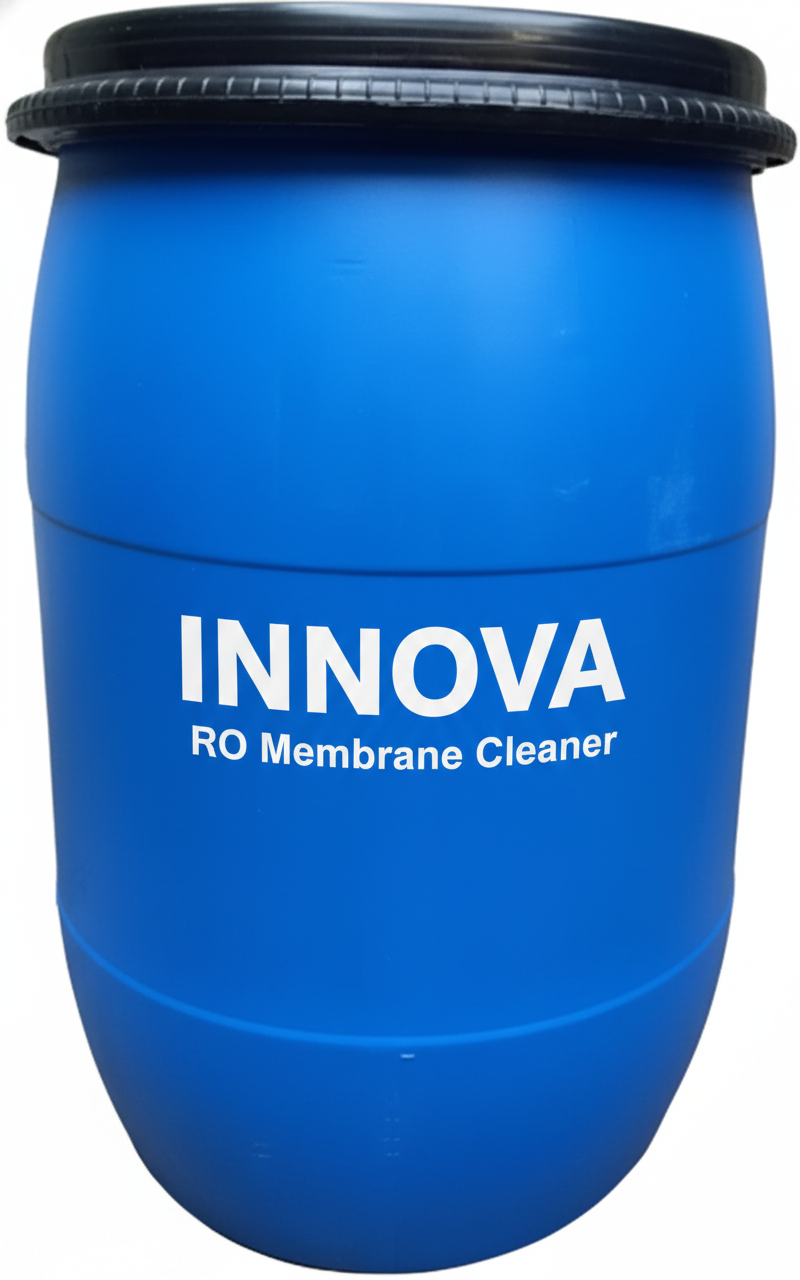
RO Membrane Cleaner Chemicals in India (CIP Solutions)
Innova Corporate (India) is a premier manufacturer, supplier, and exporter of high-performance RO Membrane Cleaners in India. Our cleaning chemicals are formulated using premium-grade constituents and advanced methodologies to ensure the thorough removal of scales and foulants, extending the life of your Reverse Osmosis system in India.
Our comprehensive range of RO Membrane Cleaners in India is designed to disperse and remove even the most stubborn deposits. These specialized formulations effectively target silica scales, biological slimes, oils, iron fouling, and complex organic compounds, restoring the membrane's flux and salt rejection efficiency for local industrial units.
What separates a professional CIP programme from a basic "wash and hope" approach is the sequence and chemistry of the cleaning steps. A typical membrane fouling problem is rarely caused by a single foulant — it is usually a layered deposit of scale, organic matter, biofilm and colloidal material. Cleaning with a single chemical will remove only one layer, leaving the others intact and preventing full performance recovery. Our range is designed to be used in a staged sequence — low pH first to dissolve mineral scale, followed by high pH to strip organic matter and biofilm, followed by a flush and performance verification.
Another critical factor that operators often overlook is temperature control during CIP. Membrane manufacturers typically recommend cleaning solutions at 35–40°C for optimal chemical activity. In Indian plants — where ambient water temperature can be as high as 32°C in summer and as low as 15°C in winter — the same cleaning protocol can deliver very different results depending on the season. Our cleaners are formulated with temperature flexibility in mind, performing effectively across the full range of temperatures typical of Indian industrial installations.
Our specialized range for India includes:
- Low pH Membrane Cleaner
- High pH Membrane Cleaner
- Iron Fouled Membrane Cleaner
- Silica Fouled Membrane Cleaner
- RO Membrane Preservative
- RO Dechlorination Chemicals
- Biofouling Cleaner
- Colloidal Fouling Cleaner
- Multi-Purpose CIP Cleaner
- Alkaline Surfactant Cleaner
Key Features: Our cleaners are characterized by low foaming, precise pH values, and biodegradable properties. They provide excellent system clean-up for India's industrial water treatment plants, boilers, food processing units, and dairies. Regular use prevents irreversible membrane damage and reduces operational costs.
Standard CIP Sequence for Best Results:
- Pre-Flush: Flush the system with permeate or low-TDS water for 5–10 minutes to remove loose foulants and residual feed water.
- Low pH Clean: Circulate the Low pH Membrane Cleaner at recommended dose and temperature for 30–45 minutes. Soak if required. This dissolves carbonate scales and metal oxides.
- Intermediate Flush: Flush thoroughly with permeate water until the displaced solution reads neutral pH.
- High pH Clean: Circulate the High pH Membrane Cleaner for 30–45 minutes. This strips organic matter, biofilm and colloidal deposits.
- Final Flush: Flush with permeate water until the outlet pH returns to the inlet pH, and residual cleaning chemical is below detection.
- Performance Test: Restart the system and compare normalised permeate flow, salt passage and differential pressure to pre-cleaning values.
How to Know Which Cleaner to Use:
- Low pH Cleaner: For calcium carbonate scale, metal oxides, iron deposits and inorganic foulants. Look for high differential pressure with declining flux.
- High pH Cleaner: For organic fouling, biofilm, oils, grease and colloidal matter. Look for slimy deposits, foul odour and biological growth.
- Iron Fouled Cleaner: For red-brown deposits in plants treating high-iron borewell water. Requires a specialised chelating chemistry.
- Silica Fouled Cleaner: For hard, glass-like white deposits that resist acid cleaning. Requires alkaline chemistry with specific silica-dissolving agents.
- Biofouling Cleaner: For microbial slime and biofilm in plants with high organic load or recycled water sources.
- Multi-Purpose Cleaner: For plants with mixed fouling where a single, broad-spectrum chemistry is preferred for simplicity.
Common CIP Mistakes to Avoid:
- Insufficient Flush Between Steps: Mixing acidic and alkaline cleaners creates violent chemical reactions that can damage the membrane.
- Wrong Temperature: Cleaning too cold wastes chemical; cleaning too hot can damage the membrane's polymer structure.
- Excessive Cleaning: Frequent, unnecessary cleaning shortens membrane life — clean only when performance indicates it is required.
- Ignoring the Concentrate Side: Cleaning only the feed side leaves foulants in the concentrate channels — always clean both sides.
- No Performance Baseline: Without normalised baseline data, you cannot judge whether the CIP was actually successful.
- Reusing Spent Cleaner: Once the cleaner is saturated with dissolved foulants, it stops working — always use fresh solution.
For customized CIP (Clean-In-Place) protocols and to select the right cleaner for your specific water analysis, contact our technical service engineers in India.