- 2B / BW Shalimar Bagh, Opp. BQ Market, Near DLF Mall New Delhi - 110088, India.
- :+91-9312-871-070

Manufacturers, Exporters, Suppliers of RO Membrane Cleaner
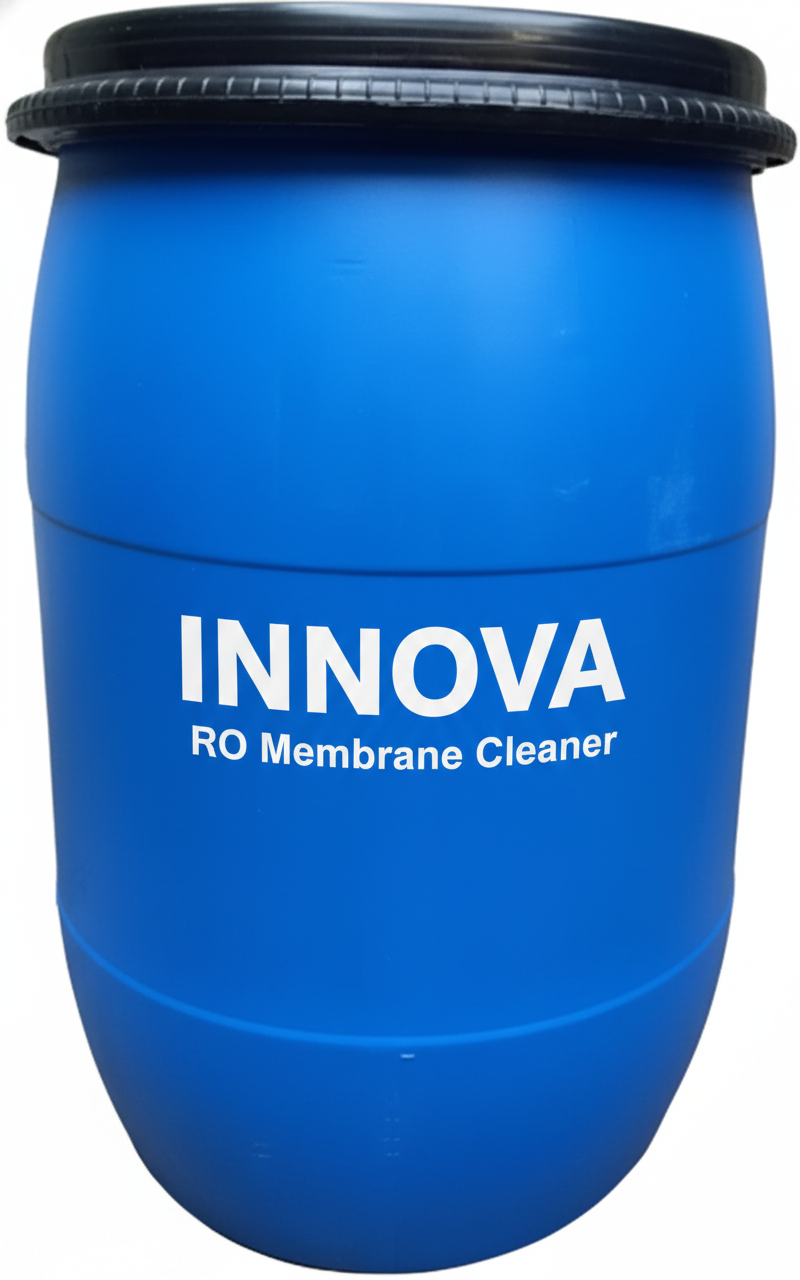
RO Membrane Cleaner Chemicals in Indonesia (CIP Solutions)
Fouling in an Indonesian RO system rarely develops as a single, uniform layer. The warm tropical climate accelerates microbial growth throughout the year, so biofilm forms continuously on any surface that is not actively protected. Below that biological layer, mineral scale continues to deposit — carbonate in some sources, sulfate in others, silica where volcanic geology contributes to the feedwater. Organic matter from surface runoff and seasonal rains binds the layers together, and the result is a mixed deposit where no single cleaning chemistry works. This is the reality that Indonesian plant operators face, and it is what our CIP chemical range is engineered to address.
Innova Corporate (India) manufactures and supplies high-performance RO membrane cleaners for Indonesia. Our formulations target the full spectrum of deposits found in Indonesian plants — silica scales, biological slimes, oils, iron fouling, and complex organic compounds — with chemistry designed to restore membrane flux and salt rejection efficiency. The range includes low pH acidic cleaners for mineral scale, high pH alkaline cleaners for organic and biological fouling, dedicated iron removal formulations, high-silica removal chemistry, and supporting products like preservatives and dechlorination chemicals.
Our specialized range for Indonesia includes:
- Low pH Membrane Cleaner
- High pH Membrane Cleaner
- Iron Fouled Membrane Cleaner
- Silica Fouled Membrane Cleaner
- Organic & Biofilm Cleaner
- RO Membrane Preservative
- RO Dechlorination Chemicals
- CIP Neutralisation & Flush Additives
How to Build a Two-Step CIP Program for Indonesian Plants:
- Step 1 — Diagnose the Deposit: Review normalized permeate flow, salt passage and differential pressure trends. Identify whether the dominant foulant is organic, biological, mineral or a layered combination. For mixed fouling, plan for a two-step program.
- Step 2 — Alkaline First (Tropical Standard): In most Indonesian surface and well water applications, alkaline cleaning comes first. It dissolves the organic and biological layer, exposing the mineral deposit underneath. Circulate at 25–35°C for 30–60 minutes, soak for 30–120 minutes, then flush with permeate.
- Step 3 — Acidic Second: Follow with low pH cleaner to dissolve carbonate, sulfate and iron oxide deposits. Monitor the solution pH and colour during circulation — when they stabilise, the reaction is complete. Flush thoroughly before returning to service.
- Step 4 — Sequence Reversal for Iron-Rich Sources: If the feedwater carries high dissolved iron from peatland or anaerobic aquifers, consider acidic cleaning first to break down the iron oxide, then alkaline cleaning to remove the organic matrix that binds it to the membrane.
- Step 5 — Verify Recovery: Compare post-CIP normalized parameters against the baseline. Full recovery restores permeate flow to within 5–10 percent of baseline and returns differential pressure to its original value.
CIP Hydrodynamics for Indonesian Operating Conditions:
- Temperature: Optimal cleaning temperature is 25°C to 35°C. Indonesia's ambient conditions mean feedwater is often already in this range — minimal heating is required compared to temperate climates.
- Circulation Velocity: 8 to 12 feet per second through the membrane element ensures turbulent flow and mechanical scouring action in addition to chemical dissolution.
- Soak Time: 30 to 120 minutes depending on fouling severity. Very heavy deposits may require overnight soaking or two cleaning cycles.
- Solution Monitoring: Check pH, colour and turbidity of the cleaning solution during circulation. Stabilisation indicates the reaction is complete.
- Flush Volume: Flush with at least two to three times the cleaning loop volume to ensure complete removal of residual chemical before returning to service.
Key Features: Our cleaners are characterized by low foaming, precise pH values, and biodegradable properties. They provide excellent system clean-up for Indonesia's industrial water treatment plants, boilers, food processing units, and dairies. Regular use prevents irreversible membrane damage and reduces operational costs by extending cleaning intervals and membrane service life.
Signs Your Indonesian RO System Needs CIP:
Frequently Asked Questions — RO Membrane Cleaner in Indonesia
1. Why does tropical feedwater in Indonesia require a different CIP approach?
Indonesia's warm climate accelerates microbial growth throughout the year. Biofilm forms faster than in temperate regions, and it co-deposits with mineral scale and organic matter to create a layered fouling structure. The outer layer may be organic or biological, while underneath it sits carbonate, sulfate or silica scale. A single cleaning chemistry rarely removes all of this. The standard approach in Indonesia is a two-step CIP program: alkaline cleaning first to dissolve organic and biological material, then acidic cleaning to remove the mineral layer underneath. The sequence matters because removing the mineral layer before the organic layer leaves the membrane surface exposed to further deposition.
2. How do I know which CIP chemical to use first — acidic or alkaline?
The choice depends on the dominant foulant. If the feedwater carries high organic load, biological activity, or visible biofilm, alkaline cleaning first is usually correct — it dissolves the organic matrix and exposes the mineral layer beneath. If the primary issue is iron, manganese or carbonate scale with relatively low organic content, acidic cleaning first may be more effective. In Indonesia, the majority of surface water and many well water sources have enough organic content that alkaline-first is the standard approach. For peaty or high-organic sources, alkaline-first is strongly recommended. We help clients decide based on water analysis and autopsy findings.
3. What is the correct temperature and circulation velocity for CIP in Indonesia?
Optimal cleaning temperature is 25°C to 35°C. Indonesia's ambient temperature means feedwater is often already in this range, which is convenient — less heating is needed than in colder climates. Circulation velocity through the membrane element should be 8 to 12 feet per second to achieve turbulent flow and mechanical scouring action in addition to chemical dissolution. Slower circulation reduces cleaning effectiveness even with the right chemistry. We provide detailed velocity calculations based on vessel diameter and element configuration for each shipment.
4. How do I remove iron fouling from membranes fed by Indonesian peatland water?
Peatland water in Sumatra, Kalimantan and Papua contains dissolved iron that oxidises and deposits on membranes as ferric hydroxide — a gelatinous deposit that blocks feed channels and reduces flux. Standard acidic cleaning alone may not fully remove this because the iron is often bound with organic matter. Our recommended approach for peatland-affected membranes is alkaline cleaning first to break up the organic-iron complex, followed by acidic cleaning with a chelating-enhanced formulation that dissolves the iron oxide. This two-step approach is more effective than treating iron fouling with a single chemistry.
5. Can your cleaner remove silica scale in membranes fed by volcanic water sources?
Silica scale is the most difficult to remove because it polymerises into an amorphous glass-like structure that resists standard acid cleaning. Our dedicated silica removal formulation combines alkaline conditions with specific dispersants that break down the silica matrix and lift it from the membrane surface. Complete removal may require multiple cleaning cycles for heavily fouled elements. We recommend pairing this with a high-silica antiscalant during normal operation to prevent the scale from forming in the first place.
6. What is membrane autopsy and when is it needed in Indonesia?
Membrane autopsy involves destructive analysis of a fouled element to identify the composition of the deposit, the condition of the membrane surface, and any signs of chemical degradation or mechanical damage. It is typically recommended when performance does not recover after correctly executed CIP, when fouling recurs rapidly after cleaning, or when the nature of the fouling is unclear. In Indonesia, autopsy is particularly useful for diagnosing whether the problem is biological, mineral, organic or a combination, and for verifying that the CIP chemicals being used are appropriate. We support clients through the autopsy process and interpret the results.
7. How do I verify that CIP has been effective?
Compare normalized parameters before and after cleaning: permeate flow, salt passage and differential pressure, all corrected for temperature. Effective cleaning typically recovers permeate flow to within 5 to 10 percent of the baseline, and brings differential pressure back to its original value. If recovery is partial, a second cleaning cycle may be needed, or the fouling may be irreversible. Beyond the immediate post-CIP verification, monitor the rate at which performance declines after cleaning. If the membrane re-fouls within weeks, the pretreatment or antiscalant program may need review.
8. How should CIP chemicals be stored and handled in Indonesia's tropical climate?
Store acidic and alkaline cleaners separately in original sealed containers, between 15°C and 35°C, away from direct sunlight and incompatible chemicals. Indonesia's climate is generally suitable for storage in shaded warehouses. Alkaline cleaners should be protected from CO₂ absorption, which can gradually reduce their effectiveness — keep containers closed when not in use. Never mix acidic and alkaline cleaners directly; they must be used in sequence with intermediate flushing. Wear appropriate PPE during handling: chemical gloves, goggles and protective clothing. Shelf life is 18 to 24 months under recommended storage conditions.
9. How often should membranes be cleaned in Indonesian RO plants?
Cleaning frequency depends on feedwater quality, operating conditions and pretreatment effectiveness. Indonesian plants using surface water with high organic load may need cleaning every 2 to 3 months. Plants using well water with moderate fouling typically clean every 3 to 6 months. The right trigger is performance-based, not calendar-based: clean when normalized permeate flow drops by 10 to 15 percent from baseline, or when differential pressure rises by 10 to 15 percent, or when salt passage increases noticeably. Regular monitoring prevents unnecessary cleaning and catches real fouling early.
10. How do you ship CIP chemicals from India to Indonesia?
We ship from Indian ports to Tanjung Priok (Jakarta), Tanjung Perak (Surabaya), Belawan (Medan), Makassar, Semarang and other major Indonesian ports. All shipments include commercial invoice, packing list, certificate of origin, MSDS and certificates required by Indonesian customs. Acidic and alkaline cleaners are classified as corrosive materials and are packed in UN-approved containers with proper classification, labelling and dangerous goods documentation. We work with freight forwarders experienced in Indonesian import procedures.
For customized CIP (Clean-In-Place) protocols and to select the right cleaner for your specific water analysis, contact our technical service engineers in Indonesia.