- 2B / BW Shalimar Bagh, Opp. BQ Market, Near DLF Mall New Delhi - 110088, India.
- :+91-9312-871-070

Manufacturers, Exporters, Suppliers of RO Dechlorination Chemicals
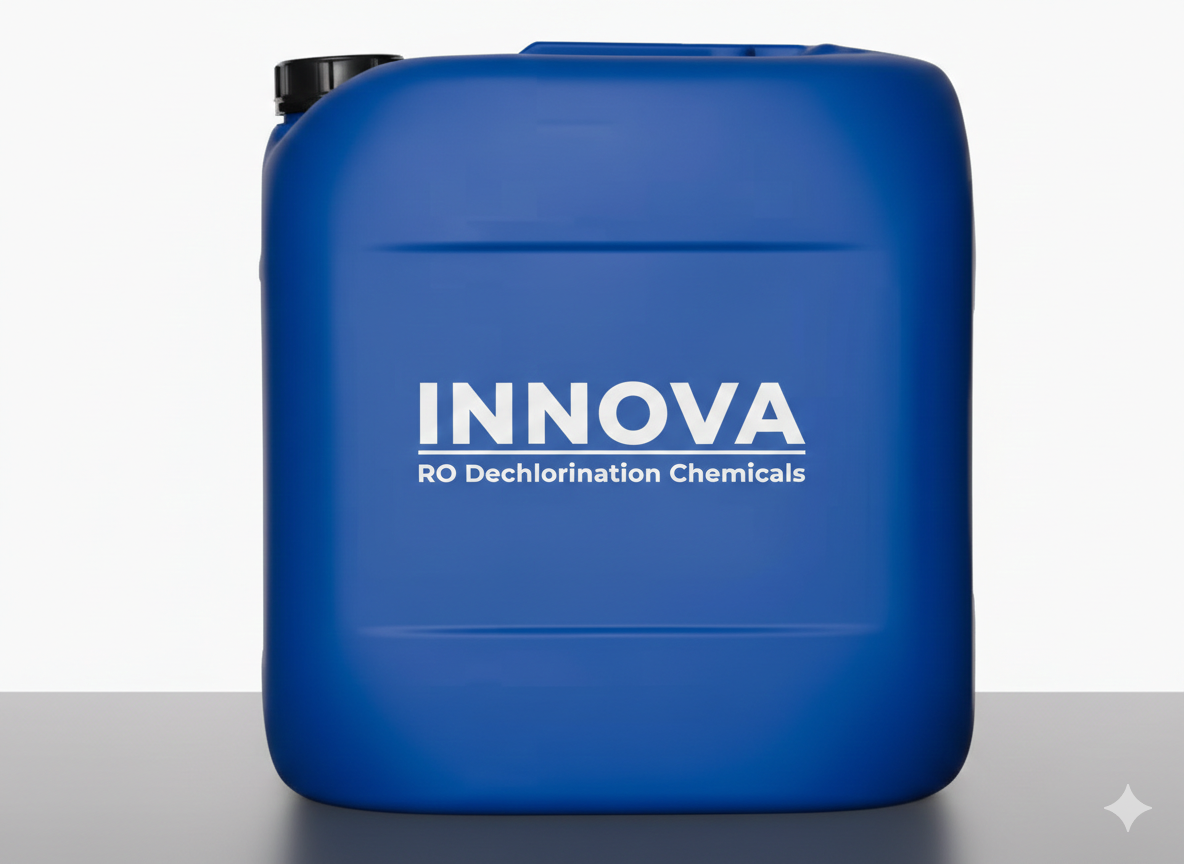
RO Dechlorination Chemicals in Indore (Oxidizing Agent Neutralizer)
Chlorine chemistry varies dramatically across Indore's industrial water sources, and managing it properly is what separates a plant that runs for years without membrane replacement from one that replaces membranes every 18 months. The Narmada river supply, which feeds a majority of the city's larger plants, is chlorinated at the source by municipal authorities to control biological growth during transmission. By the time it reaches industrial estates in Pithampur, Sanwer, Rau and Dewas, the residual chlorine has usually dropped somewhat — but not consistently, and not predictably. Borewell water drawn on-site often has no chlorine at all, while municipal supply feeding smaller units in the city can arrive with 1-2 ppm free chlorine. A plant that switches between these sources — as many do through the year — faces a shifting dechlorination requirement that demands a flexible, reliable formulation. Innova Corporate (India) supplies its RO Dechlorination Chemicals in Indore specifically for this variability.
Chlorine damage to RO membranes is different from other forms of fouling. It does not show up as scale or deposit — it chemically degrades the polyamide active layer, permanently reducing salt rejection and permeate quality. The damage is progressive: a membrane that sees even 0.1 ppm free chlorine for weeks will show falling rejection long before visible symptoms appear. Once oxidation has occurred, no cleaning chemical can reverse it — the only remedy is membrane replacement. This is why dechlorination is often described as the cheapest form of membrane insurance. For pharma manufacturers around Pithampur and Dewas, where product quality depends on consistent purified water, the cost of a membrane failure is not just the replacement — it is batch rejection, regulatory investigation and reputational damage. For textile and food processing units, the impact is operational: sudden drops in permeate quality disrupt downstream processes and force unplanned shutdowns.
Key Features & Strategic Benefits for Indore Industries:
- Rapid Neutralization: Stabilized formula ensures near-instant action in neutralizing free chlorine in the feed water.
- Critical Membrane Protection: Guards Polyamide and TFC membranes against oxidative degradation and chemical "burning" in Indore's treatment facilities.
- Liquid Precision: Unlike conventional powders, our liquid formula is easy to handle, store, and dose with high accuracy at your Indore site.
- Enhanced Stability: Significantly more stable and effective than traditional sodium bisulfite solutions.
- System Longevity: Prevents premature membrane replacement costs by shielding against chlorine attack.
- Variable Source Compatibility: Performs reliably across Narmada, borewell and municipal supply — no reformulation when plants switch sources.
- Winter Stability: Retains full reducing activity at 12-15°C feed water temperatures common during Indore winters, when many dechlorinators lose potency.
- Chloramine Control: Effective against combined chloramines formed when municipal chlorine reacts with organic matter in Narmada river water.
Application & Dosage Guidelines for Indore:
The dosage depends on the residual chlorine levels and contact time. Typically, the dosage ranges from 3 ppm to 15 ppm for Indore water conditions.
- Injection Point: Should be dosed as close to the RO system as possible (e.g., before cartridge filters).
- High Chlorine Strategy: If free chlorine is high, dose de-chlorinator prior to antiscalant injection, as chlorine can neutralize the effectiveness of antiscalants.
- Safe Mixing: Avoid mixing neat (concentrated) de-chlorinator and antiscalant directly; ensure dosing points are properly spaced in your Indore plant setup.
- Monitoring: Test free chlorine at the cartridge filter outlet regularly. Any readable chlorine entering the membrane means the dose needs adjustment — especially during summer when Narmada chlorination rises.
Where Indore Industries Rely on This Dechlorination Chemical:
- Pharmaceutical Manufacturing: Complete chlorine removal for purified water loops and WFI systems in Pithampur and Dewas, where membrane oxidation directly affects product quality.
- Textile & Dyeing: Chlorine-free feed water for RO plants feeding dye houses and finishing operations across the Malwa belt, where oxidative damage affects shade consistency.
- Food & Dairy Processing: Safe dechlorination for CIP and process water applications in dairy and packaged food plants.
- Automotive & Auto Components: Extended membrane life for RO plants feeding paint shops and rinse lines across the Pithampur industrial belt.
- Boiler Feed Pre-treatment: Removes chlorine that would otherwise attack downstream boiler metallurgy and interfere with scale inhibitors.
- Commercial & Institutional RO: Reliable dechlorination for hotels, hospitals and residential complexes drawing on chlorinated municipal supply.
Handling & Safety Measures:
Always wear proper safety gear, including splash goggles, lab coats, gloves, and vapor respirators. In case of skin contact, wash immediately with water. Store in original containers in a cool, dry place at your Indore facility, away from direct sunlight and heat sources. Recommended storage temperature is between 5°C to 40°C. Keep containers tightly sealed when not in use. Refer to the MSDS for comprehensive safety data.
*Note: As a company policy, Innova Corporate recommends consulting our service engineers in Indore for precise dosage requirements based on your specific water chemistry. The product has a shelf life of 12 months from the date of manufacturing when stored under recommended conditions.