- 2B / BW Shalimar Bagh, Opp. BQ Market, Near DLF Mall New Delhi - 110088, India.
- :+91-9312-871-070

Manufacturers, Exporters, Suppliers of RO Disinfectant Chemicals
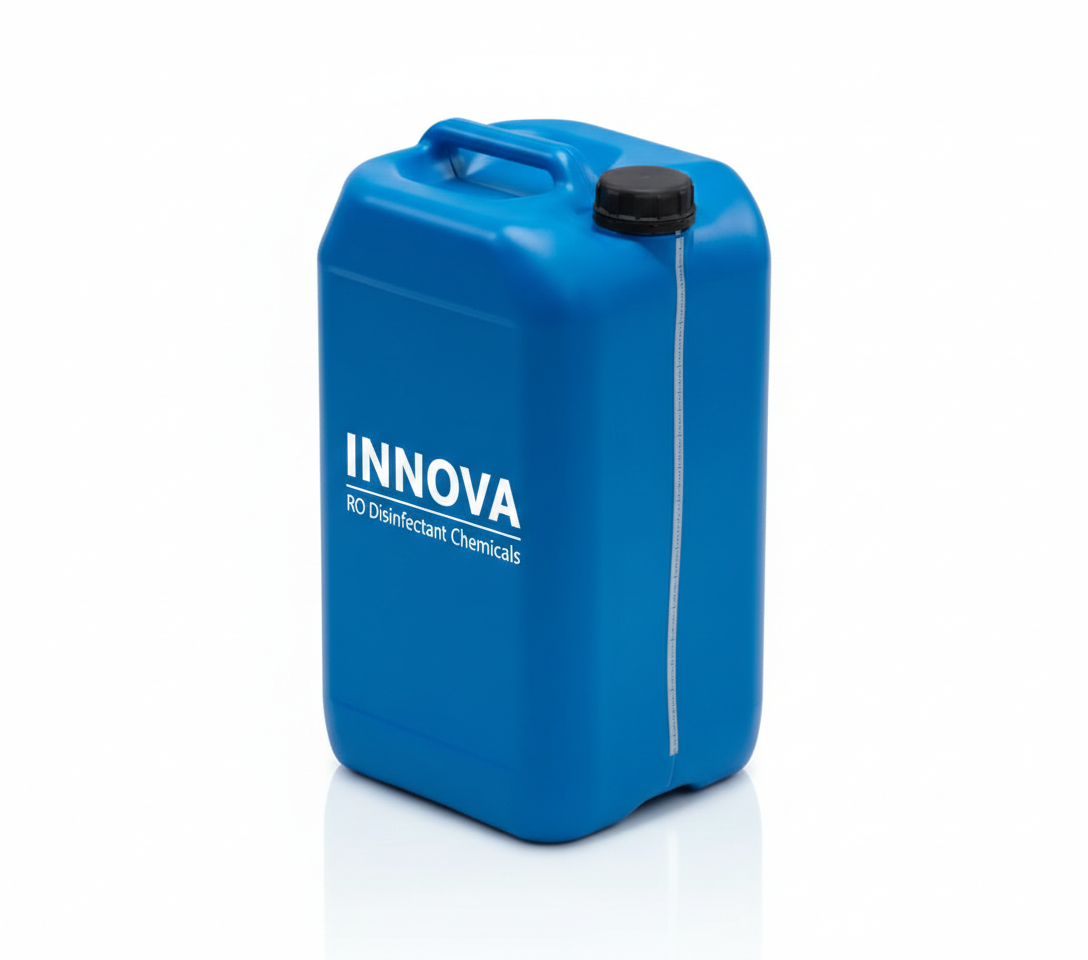
RO Disinfectant Chemicals in Kenya for Municipal, Hospital & Dairy Water Systems (Potable-Grade Microbiocide)
Innova Corporate (India) supplies RO Disinfectant Chemicals in Kenya for municipal drinking water utilities in Nairobi, Kisumu and Mombasa, hospital water systems in Kisumu and Nairobi including dialysis and sterile water, dairy processing plants in Nakuru and Eldoret, and school, university and institutional RO plants across Kenya. Biological fouling and biofilm growth severely restrict membrane flow and compromise water quality. Kenya's tropical and highland climate accelerates microbial growth in municipal and institutional water systems. Chlorine-based disinfectants cannot be used directly on polyamide membranes because they cause irreversible oxidation damage and form harmful DBPs. Our potable-grade non-oxidizing microbiocide is engineered to eliminate a broad spectrum of microorganisms without damaging sensitive membrane structures in Kenya's municipal, hospital and dairy water plants.
Our RO disinfectant in Kenya is a safe and powerful solution for the disinfection of Reverse Osmosis systems, including those used for potable water in Nairobi, Kisumu and Mombasa. It effectively targets bacteria, fungi, algae and sulfate-reducing bacteria common in Kenya's municipal and borewell water sources, ensuring that your membrane system remains free from biological sliming and maintains peak performance. For municipal drinking water plants serving Kenyan communities and hospital dialysis water systems, potable-grade formulations are available that meet KEBS drinking water guidelines and NEMA discharge limits.
Kenya Institutional Water Disinfection — City & Facility Guide:
| Kenyan City | Facility Type | Disinfection Challenge |
|---|---|---|
| Nairobi | Municipal utility, hospitals | Large-volume potable water, KEBS compliance |
| Kisumu | Hospital dialysis, municipal | Patient-critical water, Lake Victoria microbial load |
| Nakuru | Dairy processing | Biofilm in pasteurisation and RO lines |
| Eldoret | Dairy, grain processing | Combined microbial and iron load |
| Mombasa | Municipal, hospitals | Coastal groundwater biofilm, NEMA discharge |
| Thika, Nyeri | Schools, institutions | Borewell water, small-scale RO disinfection |
Key Features & Strategic Benefits for Kenyan Municipal, Hospital & Dairy RO:
- Broad-Spectrum Efficacy: Highly effective against bacteria, fungi, algae, viruses and SRB, preventing bio-fouling and pressure drops in Kenya's municipal and hospital RO systems.
- Potable Water Safe: Certified safe for RO systems producing drinking water for Kenyan communities when used as per KEBS guidelines.
- Hospital Dialysis Safe: Meets strict microbial limits for dialysis and sterile water systems — used by Kisumu and Nairobi hospitals for patient-critical water.
- Dairy CIP Compatible: Effective against biofilm in pasteurisation and RO lines in Nakuru and Eldoret dairy plants, meeting KEBS food safety standards.
- Non-Oxidizing Formula: Unlike chlorine, it does not oxidize or degrade Polyamide or TFC membranes used in Kenyan municipal and institutional RO systems.
- NEMA Compliant: Breaks down into non-toxic components — meets Kenya NEMA discharge limits for municipal and institutional plants.
- Algal Bloom Ready: Effective during Lake Victoria seasonal algal blooms when microbial load increases sharply in Kisumu and western Kenya.
- Total System Compatibility: Fully compatible with all RO membrane components, housings and high-pressure pumps used in Kenya.
- No Chlorine Taste: Municipal and hospital water systems provide chlorine-free potable water — no consumer complaints about taste or odour.
Facilities We Serve Across Kenya:
Municipal Drinking Water Utilities (Nairobi, Kisumu, Mombasa): Municipal RO plants use potable-grade disinfectant for community water supply — no chlorine taste, KEBS-compliant.
Hospital Dialysis Water (Kisumu, Nairobi): Hospitals use potable-grade disinfectant for dialysis and sterile water systems — meets strict microbial limits for patient safety.
Dairy Processing (Nakuru, Eldoret): Dairy plants use potable-grade disinfectant for CIP of RO and pasteurisation lines, meeting KEBS food safety standards.
Schools & Universities (Nairobi, Thika, Nyeri): Educational institutions use potable-grade disinfectant for drinking water RO — no chlorine taste for students.
Food Processing (Thika, Nairobi): Food processing plants use potable-grade disinfectant for process water RO, meeting KEBS standards.
Pharmaceutical Water (Nairobi): Pharma plants use potable-grade disinfectant for purified water systems, meeting KEBS and international pharmacopoeia standards.
Non-Oxidizing Biocide vs Chlorine — Why Kenyan Municipal & Hospital Plants Prefer Non-Oxidizing:
| Parameter | Chlorine (Oxidizing) | Non-Oxidizing Biocide |
|---|---|---|
| Effect on Polyamide Membranes | Degrades membrane surface | Safe for polyamide and TFC |
| Dialysis Water Safety | DBP risk to patients | No DBP — safe for patients |
| NEMA Discharge | DBP limits exceeded | Fully compliant |
| Consumer Taste | Chlorine taste complaints | No taste, no odour |
Application & Dosage for Kenya Plants:
Dosage depends on the severity of biological fouling. We recommend two primary methods for Kenya facilities:
- Shock Dosing (Immediate Disinfection): Use a concentration of 50–200 ppm for rapid system sterilisation during shutdowns, ideal for municipal and hospital plants recovering from monsoon or algal bloom microbial load.
- Continuous Dosing (Preventative): Maintain a concentration of 2–10 ppm in the feed water for round-the-clock microbial control in Kenya's municipal, hospital and dairy RO systems.
- Injection Point: Before cartridge filter and static mixer, on the feed side of the RO membranes.
- Dilution: Can be fed neat or diluted up to 10% with RO permeate water. Never dilute with raw water.
- Monitoring: Track microbial counts, differential pressure and permeate flow to confirm biocide effectiveness.
Recommended Membrane Cleaning Protocol for Kenya:
- Disinfect the system with Innova RO Disinfectant to eliminate biofilm and microbial load.
- Flush thoroughly with permeate water.
- Circulate a High pH Membrane Cleaner solution for 30 minutes, then soak for 1–2 hours to remove organic foulants.
- Final flush with permeate water before returning the Kenya plant to normal service.
*Note: In multi-pass systems and Kenya's tropical and highland conditions, clean each pass individually for the best results. Replace cleaning solutions if they become excessively turbid.*
Common Biofouling Problems in Kenyan Municipal, Hospital & Dairy RO Systems:
Municipal Water Biofilm: Nairobi, Kisumu and Mombasa municipal RO plants face biofilm accumulation in distribution networks. Potable-grade non-oxidizing biocide controls this without chlorine taste.
Hospital Dialysis Contamination: Kisumu and Nairobi hospital dialysis water systems require strict microbial control. Potable-grade biocide meets dialysis water quality standards.
Nakuru & Eldoret Dairy Biofilm: Dairy processing plants face biofilm formation in pasteurisation and RO lines. Non-oxidizing biocide penetrates and destroys biofilm at CIP dosage.
Lake Victoria Algal Blooms: Kisumu and western Kenya water sources face seasonal algal blooms that increase microbial load. Non-oxidizing biocide controls this without chloramine formation.
School & Institutional Borewell Biofilm: Thika, Nyeri and Nairobi school RO systems face biofilm from borewell water. Potable-grade biocide disinfects without chlorine taste for students.
Membrane Flux Decline: Biofilm deposits cause gradual but persistent loss of permeate flow and rising differential pressure in Kenyan municipal and institutional RO systems.
Technical Specifications:
| Appearance | Clear to pale yellow liquid |
| Type | Non-oxidizing organic biocide |
| pH (as is) | 6.0 – 8.0 |
| Specific Gravity | 1.02 – 1.10 |
| Recommended Dosage | 2–10 ppm (continuous) / 50–200 ppm (CIP) |
| Solubility | Fully miscible in water |
| Certification | NEMA compliant, KEBS drinking water compliant |
| Shelf Life | 12 months in original sealed container |
Frequently Asked Questions (Kenya):
Q: What are RO disinfectant chemicals used for in Kenya?
A: They are used for potable water sanitation in municipal drinking water plants, hospital water systems including dialysis, dairy processing in Nakuru and Eldoret, and school and institutional RO plants. They eliminate bacteria, viruses and biofilm without leaving harmful residue.
Q: Are your RO disinfectants compliant with KEBS and NEMA for Kenya?
A: Yes. Our potable-grade RO disinfectants are formulated to comply with Kenya Bureau of Standards (KEBS) drinking water guidelines and Kenya NEMA industrial discharge limits. They break down into non-toxic components without forming harmful DBPs.
Q: Which Kenyan institutions use potable-grade RO disinfectant the most?
A: Municipal water utilities in Nairobi and Kisumu, hospitals in Kisumu, Nairobi and Mombasa with dialysis and sterile water systems, dairy processing plants in Nakuru and Eldoret, and schools, universities and institutional RO plants across Kenya.
Q: Can this disinfectant be used for dialysis water in Kenyan hospitals?
A: Yes. Our potable-grade formulation meets the strict microbial limits required for dialysis and sterile water systems. It is used by hospitals in Kisumu, Nairobi and Mombasa that need consistent, residue-free disinfection for patient-critical water.
Q: What dosage of RO disinfectant is recommended for Kenyan municipal plants?
A: Typical dosage is 2–10 ppm for continuous feed dosing, or 50–200 ppm for CIP sanitisation. For hospital dialysis water and dairy processing, dosage is kept low to meet KEBS quality standards.
Q: Do you supply RO disinfectants across Kenya?
A: Yes, we supply potable-grade RO disinfectants to municipal, hospital, dairy and institutional plants across Kenya, including Nairobi, Mombasa, Kisumu, Nakuru, Eldoret, Thika, Naivasha and Nyeri.
Safety & Handling: Proper PPE (splash goggles, lab coats, gloves and vapour respirators) must be worn. Store in original containers in a cool, dry place at your Kenya site, away from direct heat or sunlight. In case of skin contact, wash immediately with water. Refer to the Material Safety Data Sheet (MSDS) and Technical Data Sheet (TDS) for comprehensive safety data and dosage protocols.
Related Products: Explore our Membrane Biocides for Kenya, RO Antiscalant Chemicals for Kenya, and Silver Hydrogen Peroxide Disinfectant for a complete RO chemical programme across Kenya.