- 2B / BW Shalimar Bagh, Opp. BQ Market, Near DLF Mall New Delhi - 110088, India.
- :+91-9312-871-070

Manufacturers, Exporters, Suppliers of RO Dechlorination Chemicals
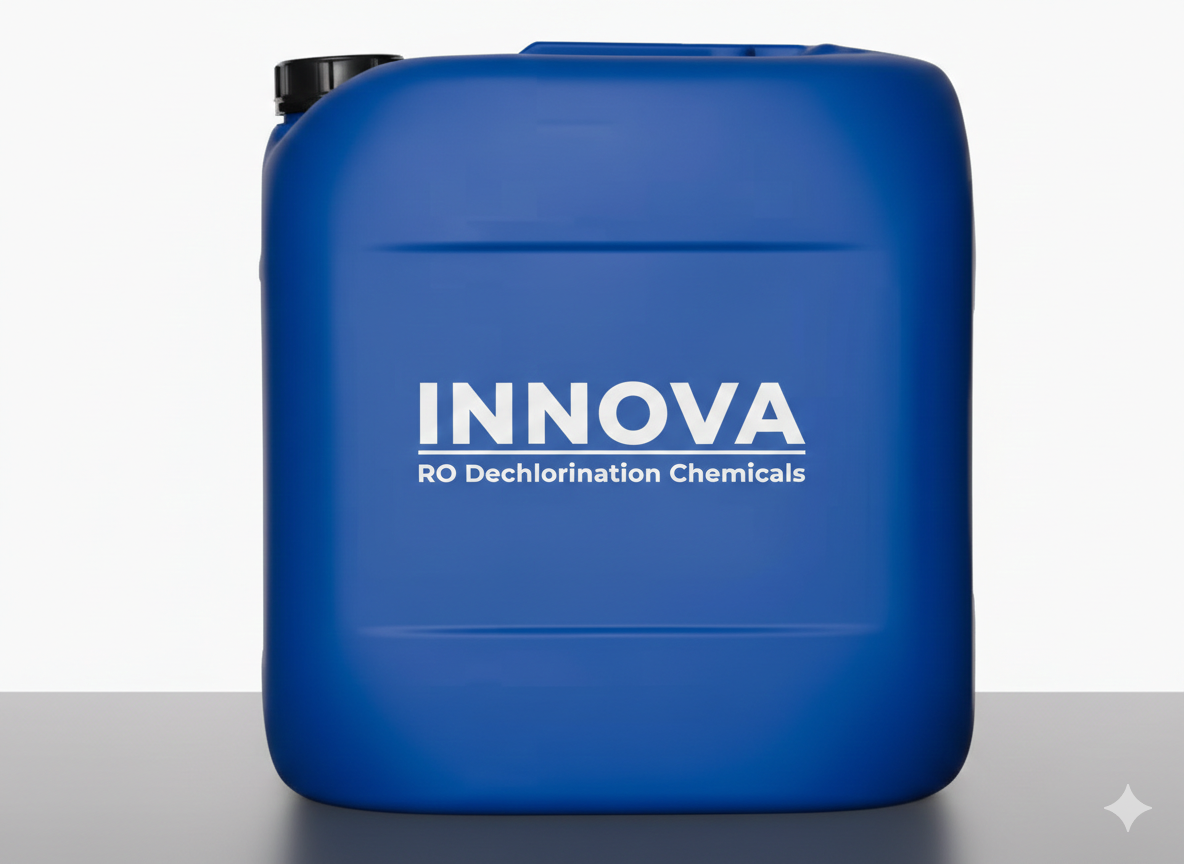
RO Dechlorination Chemicals in Kerala (Oxidizing Agent Neutralizer)
Chlorine management in Kerala is more complicated than in most Indian states, because the water itself changes character through the year. During the monsoon months, surface water sources across the Western Ghats carry heavy organic loads — leaf litter, soil particles, microbial matter washed down by rainfall. Municipal treatment plants respond by raising chlorine doses to maintain disinfection, sometimes pushing residual chlorine in the distribution network above 2 ppm. In the dry months, the same sources drop to lower organic loads and chlorine residuals fall accordingly. For industrial RO plants drawing on municipal supply in Kochi, Trivandrum, Kozhikode or Kollam, this seasonal swing means the dechlorination requirement changes month to month, and a fixed dosing routine that works in January may fail badly in July. Innova Corporate (India) supplies RO Dechlorination Chemical in Kerala formulated for this kind of variability — a stabilized liquid that neutralizes free chlorine and chloramines on contact, across a wide range of feed chlorine levels.
The stakes in Kerala are particularly high because many of the state's industrial RO plants serve sensitive downstream processes. Seafood processors in Kochi and Alappuzha exporting to EU and US markets, dairy plants in Thrissur and Ernakulam running continuous CIP cycles, pharmaceutical units producing purified water for sterile manufacturing — for all of these, a single chlorine breakthrough that damages the TFC membrane is not just a maintenance cost. It shows up as falling rejection rates, rising permeate TDS and quality failures that can trigger batch rejections and regulatory consequences. Polyamide membranes that contact free chlorine above 0.1 ppm for sustained periods suffer irreversible oxidation, and the damage only becomes visible weeks later when performance has already drifted. Dechlorination done properly, with a chemistry that reacts reliably and completely, is the only way to prevent this outcome.
What makes our formulation practical for Kerala conditions is its stability in warm, humid ambient temperatures. Sodium bisulfite powder, the conventional choice, loses reducing strength over time and is difficult to dose accurately in variable feed conditions. Our stabilized liquid holds full activity across its shelf life and reacts with chlorine almost instantaneously, so the dechlorination step keeps pace with whatever chlorine level the municipal supply delivers. Plants in coastal districts where saline intrusion complicates feed water chemistry also benefit from the formulation's tolerance to elevated TDS — the reaction proceeds cleanly without the interference that affects simpler reducing agents.
Key Features & Strategic Benefits for Kerala Industries:
- Rapid Neutralization: Stabilized formula ensures near-instant action in neutralizing free chlorine in the feed water.
- Critical Membrane Protection: Guards Polyamide and TFC membranes against oxidative degradation and chemical "burning" in Kerala's treatment facilities.
- Liquid Precision: Unlike conventional powders, our liquid formula is easy to handle, store, and dose with high accuracy at your Kerala site.
- Enhanced Stability: Significantly more stable and effective than traditional sodium bisulfite solutions.
- System Longevity: Prevents premature membrane replacement costs by shielding against chlorine attack.
- Chloramine Control: Effective not just against free chlorine but also against combined chloramines, which many conventional reducing agents handle poorly.
- Monsoon Feed Tolerance: Maintains reliable dechlorination even when monsoon organic loads push municipal chlorine residuals higher than normal.
- Coastal Water Compatibility: Performs reliably in saline-intruded feed water where elevated TDS can interfere with simpler reducing chemistries.
Application & Dosage Guidelines for Kerala:
The dosage depends on the residual chlorine levels and contact time. Typically, the dosage ranges from 3 ppm to 15 ppm for Kerala water conditions.
- Injection Point: Should be dosed as close to the RO system as possible (e.g., before cartridge filters).
- High Chlorine Strategy: If free chlorine is high, dose de-chlorinator prior to antiscalant injection, as chlorine can neutralize the effectiveness of antiscalants.
- Safe Mixing: Avoid mixing neat (concentrated) de-chlorinator and antiscalant directly; ensure dosing points are properly spaced in your Kerala plant setup.
- Monitoring: Test free chlorine at the cartridge filter outlet regularly. Any readable chlorine entering the membrane means the dose needs adjustment — especially during monsoon when residuals climb.
Where Kerala Industries Rely on This Dechlorination Chemical:
- Seafood Processing: Complete chlorine removal for RO water feeding shrimp, fish and value-added seafood lines in Kochi and Alappuzha export units.
- Dairy & Beverage: Reliable dechlorination for CIP and process water in Thrissur and Ernakulam dairy operations, where chlorine residues affect taste and compliance.
- Pharmaceutical Manufacturing: Trace-level chlorine control for purified water loops and WFI systems where membrane integrity is critical.
- Spice & Food Processing: Chlorine-free permeate for spice washing, ready-to-eat food and packaged product lines across Kerala.
- Drinking Water RO Plants: Safe, potable-grade dechlorination for hotels, hospitals and community water systems across the state.
- ZLD & High-Recovery Systems: Consistent chlorine control for plants operating above 75% recovery, where any membrane damage is magnified.
Handling & Safety Measures:
Always wear proper safety gear, including splash goggles, lab coats, gloves, and vapor respirators. In case of skin contact, wash immediately with water. Store in original containers in a cool, dry place at your Kerala facility, away from direct sunlight and heat sources. Recommended storage temperature is between 5°C to 40°C. Keep containers tightly sealed when not in use, and store away from incompatible materials such as strong oxidizers. Refer to the MSDS for comprehensive safety data.
*Note: As a company policy, Innova Corporate recommends consulting our service engineers in Kerala for precise dosage requirements based on your specific water chemistry. The product has a shelf life of 12 months from the date of manufacturing when stored under recommended conditions.