- 2B / BW Shalimar Bagh, Opp. BQ Market, Near DLF Mall New Delhi - 110088, India.
- :+91-9312-871-070

Manufacturers, Exporters, Suppliers of RO Antifoulant
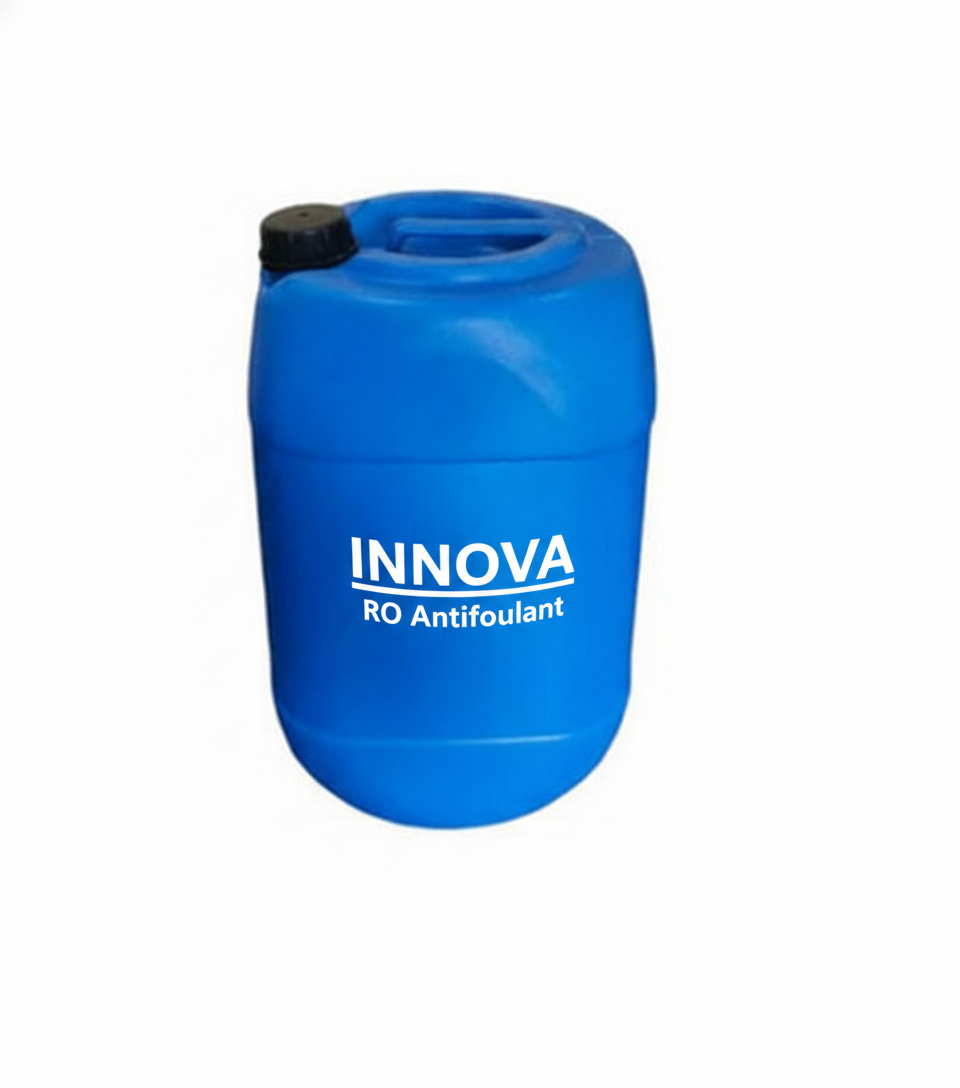
RO Antifoulant in Muscat for Colloidal, Silt & Organic Fouling Control in Effluent & Industrial RO Plants
Innova Corporate (India) supplies RO Antifoulant in Muscat for industrial and effluent RO plants facing colloidal, silt, clay and organic fouling. Effluent treatment RO systems near Al Rusayl, textile processing units around Knowledge Oasis Muscat, and chemical manufacturing plants in Al Wadi Al Kabir regularly see high Silt Density Index (SDI), suspended solids and organic load in their feed water. Standard antiscalants handle only mineral scale — they cannot stop silt, clay and organic matter from depositing on membrane surfaces. This antifoulant keeps these particles in suspension, protects membrane pores and maintains steady flow rates across Muscat's industrial water plants.
Muscat's industrial water sources — municipal effluent, process discharge and borewell water — vary significantly in turbidity, organic content and colloidal load across seasons. This antifoulant provides an essential layer of protection in these fluctuating conditions. It reduces SDI, prevents emergency maintenance and extends CIP intervals for effluent and process water RO systems across Muscat's industrial zones.
Technical Superiority: This formulation is exceptionally effective for feed water with an LSI (Langelier Saturation Index) up to +2.5, iron levels up to 1.2 ppm in reject, and high SDI (Silt Density Index). It provides a robust shield against common foulants found in Muscat's industrial and effluent water, including:
Targeted Fouling Protection for Muscat Industrial RO Plants:
- Colloidal & Silt Dispersion: Imparts a high anionic charge to colloidal particles, keeping silt and clay suspended in the feed stream instead of depositing on membranes in Muscat effluent RO plants.
- Organic & Humic Acid Control: Prevents humic acid, protein and organic matter from forming gel-like layers on membranes in textile and food processing effluent RO systems.
- Sulfate & Carbonate Scale Inhibition: Controls Calcium, Barium, Strontium and Magnesium scales alongside organic fouling in mixed-fouling Muscat feed water.
- Metallic & Silica Scale Prevention: Prevents Calcium Fluoride, Iron and Silica deposition common in Muscat industrial water sources.
- High SDI Tolerance: Performs effectively in high-SDI and high-turbidity feed water from municipal effluent and open intakes in Muscat.
- Universal Membrane Compatibility: Safe for all major Polyamide, TFC, NF and UF membranes used in Muscat industrial RO systems.
Industries We Serve in Muscat:
Effluent Treatment RO (Al Rusayl): Municipal and industrial effluent RO plants face high colloidal, silt and organic load. Antifoulant reduces SDI and protects membranes from rapid fouling.
Textile Processing (Knowledge Oasis Muscat): Textile effluent contains dye, organic matter and suspended solids. Antifoulant keeps these foulants suspended and prevents membrane plugging.
Chemical Manufacturing (Al Wadi Al Kabir): Chemical process water RO systems face mixed fouling from organics, colloids and mineral scale. Antifoulant handles all three in a single formulation.
Food Processing Effluent: Food plant effluent RO systems with high organic load use antifoulant to maintain consistent permeate quality and reduce CIP frequency.
Antiscalant vs Antifoulant — What's the Difference:
| Parameter | Antiscalant | Antifoulant |
|---|---|---|
| Target | Mineral scale only | Mineral scale + colloidal + organic |
| Foulants Controlled | Carbonate, sulfate, silica | Scale + silt, clay, humic, organics |
| SDI Reduction | Limited | Significant |
| Best For | Clean feed water (low SDI) | Effluent and high-SDI feed water |
Dosage & Application Guide for Muscat RO Plants:
- Standard Dosage: 2–6 ppm in feed water, based on SDI, turbidity and organic load.
- High-Load Effluent RO: For Muscat effluent RO with high colloidal load, dosage may increase up to 8 ppm.
- Injection Point: Dose before cartridge filter and static mixer, on the feed side of the RO membranes.
- Dilution: Can be fed neat or diluted up to 10% with RO permeate water. Never dilute with raw water.
- Monitoring: Track SDI, turbidity, differential pressure and permeate flow to confirm antifoulant effectiveness.
Common Fouling Problems in Muscat Industrial & Effluent RO Systems:
Colloidal & Silt Fouling: Suspended clay and silt particles from effluent and open intakes deposit on membranes, raising differential pressure rapidly.
Organic & Humic Fouling: Humic acid and organic matter form gel-like layers that reduce permeate flow and are difficult to remove with standard cleaners.
Mixed Fouling: Mineral scale combined with organic and colloidal fouling — the most common challenge in Muscat effluent RO plants.
High SDI Feed Water: SDI above 5 causes rapid membrane fouling. Antifoulant reduces effective SDI and extends CIP intervals significantly.
Technical Specifications:
| Appearance | Clear to pale yellow liquid |
| pH (as is) | 2.0 – 4.0 |
| Specific Gravity | 1.10 – 1.20 |
| LSI Tolerance | Up to +2.5 |
| Iron Tolerance (reject) | Up to 1.2 ppm |
| Recommended Dosage | 2 – 6 ppm (up to 8 ppm for high-load effluent) |
| Shelf Life | 12 months in original sealed container |
Frequently Asked Questions (Muscat):
Q: What is the difference between antiscalant and antifoulant?
A: Antiscalant prevents mineral scale only. Antifoulant is broader — it controls mineral scale plus colloidal, silt, clay, humic acid and organic fouling. For mixed fouling in Muscat effluent RO plants, antifoulant is the better choice.
Q: Which Muscat industries need antifoulant the most?
A: Effluent treatment RO plants, textile processing, food processing, chemical manufacturing and industrial process water RO systems in Muscat need antifoulant the most.
Q: How does antifoulant reduce Silt Density Index in Muscat plants?
A: Antifoulant disperses colloidal and silt particles by imparting a high anionic charge, keeping them suspended in the feed stream instead of depositing on the membrane. This directly reduces SDI.
Q: Is antifoulant safe for polyamide and TFC membranes?
A: Yes, when used at recommended dosage. Our antifoulant is compatible with polyamide, TFC, NF and UF membranes used in Muscat industrial and effluent RO systems.
Q: What dosage of antifoulant is recommended for Muscat RO plants?
A: Typical dosage is 2–6 ppm in feed water, depending on SDI, turbidity and organic load. For effluent RO with high colloidal load, dosage may go up to 8 ppm.
Q: Do you supply antifoulant across Muscat industrial areas?
A: Yes, we supply to effluent treatment, textile, chemical and process water RO plants across Muscat, including Al Rusayl, Al Wadi Al Kabir, Knowledge Oasis Muscat and surrounding areas.
As a globally recognized RO Antifoulant manufacturer serving Muscat, Innova Corporate (India) ensures that every batch undergoes rigorous quality checks. Whether you are dealing with challenging effluent water, high-TDS sources or high-SDI feed water in Muscat, our antifoulant provides the stability your plant needs for uninterrupted operation.
Storage & Support: Keep in original containers in a cool, dry place away from direct sunlight at your Muscat facility. For detailed dosing charts and water analysis support, please refer to our Technical Data Sheet (TDS) or contact our technical experts specializing in Muscat water treatment solutions.
Related Products: Explore our Complete RO Antiscalant Range, RO Membrane Cleaner, and RO Disinfectant Chemicals for a complete RO chemical programme.