- 2B / BW Shalimar Bagh, Opp. BQ Market, Near DLF Mall New Delhi - 110088, India.
- :+91-9312-871-070

Manufacturers, Exporters, Suppliers of Antiscalant For Sea Water Desalination
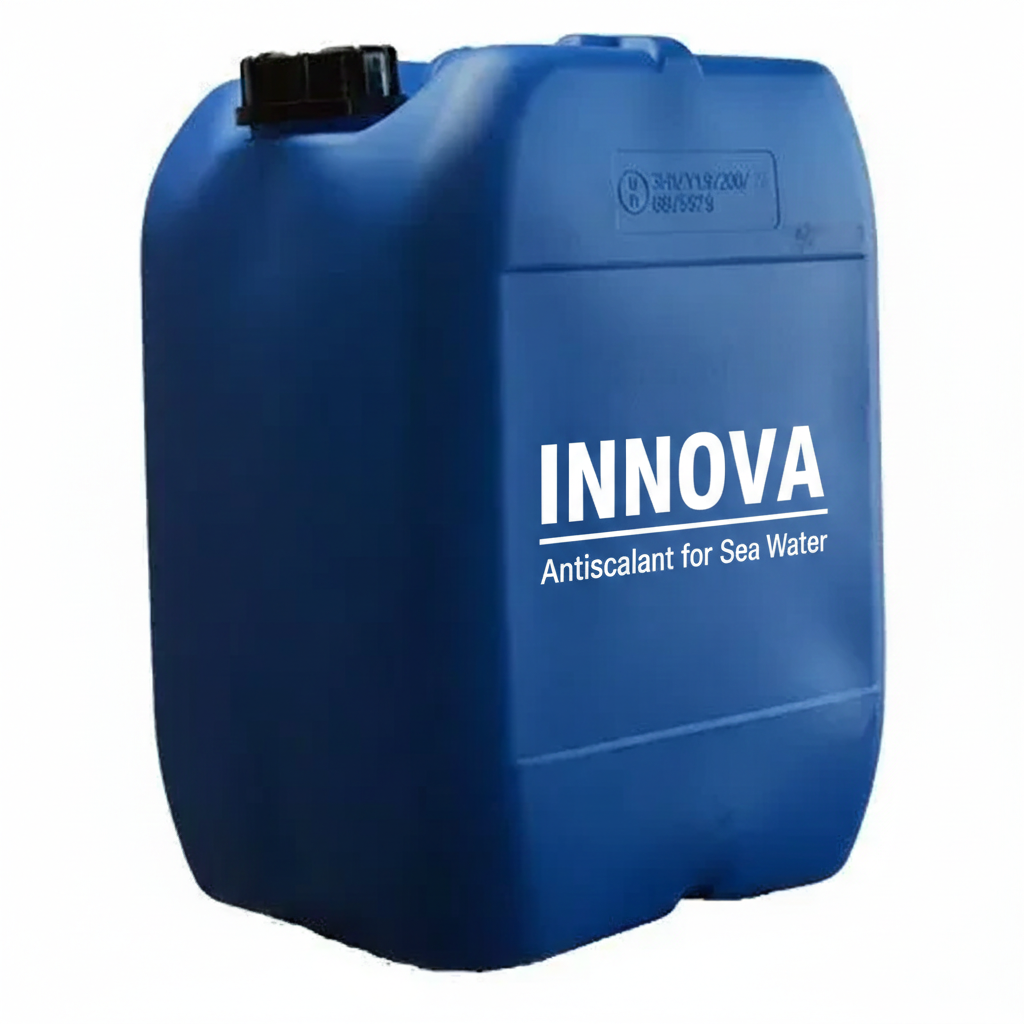
High-Efficiency Antiscalant for Seawater Desalination Applied to Nairobi's High-TDS Brackish & ZLD Systems
For the high-TDS brackish water and specialized industrial filtration in Nairobi, Innova Corporate (India) provides antiscalant for seawater desalination. While Nairobi is inland, many industries utilize high-pressure RO systems to treat mineral-heavy borehole water — including the very high TDS sources that require SWRO-grade chemistry. Our chemical prevents the formation of tough inorganic scales in the membranes used in Nairobi's most advanced water purification units, from high-recovery brackish plants to Zero Liquid Discharge systems operating at extreme concentration factors.
This product is engineered to perform under extreme mineral concentrations, ensuring that Nairobi's industrial plants maintain high water recovery. It is a critical solution for Nairobi-based companies moving toward Zero Liquid Discharge (ZLD) — where water is concentrated to the point that standard antiscalants simply cannot handle the scaling load. By using our desalination-grade antiscalant, Nairobi operators can push their water recovery to the limit without risking membrane failure. The same formulation also serves coastal Kenya desalination operators who require SWRO-grade chemistry for Indian Ocean feed water.
Our product is specifically effective in environments with high TDS (Total Dissolved Solids), ensuring that membrane permeate flow remains consistent even under rigorous operating conditions in Nairobi. It significantly reduces the frequency of acid cleanings, thereby extending the operational lifespan of expensive RO and SWRO membranes used in the region. For facilities operating at the extremes of water recovery — where brine concentration can reach 5–7x the feed TDS — this chemistry provides the stability that standard antiscalants cannot.
Key Features & Strategic Benefits for Nairobi Operations:
- High-TDS Optimized: Specifically formulated for brackish water sources with TDS above 3,000 ppm — providing stable scale inhibition where general-purpose antiscalants lose effectiveness.
- ZLD-Ready Performance: Engineered for the extreme concentration factors typical of Zero Liquid Discharge systems — where feed water concentrates 5–7x and standard chemistry fails.
- Broad-Spectrum Scale Control: Handles calcium carbonate, calcium sulphate, barium sulphate, strontium sulphate, magnesium hydroxide and silica dispersion simultaneously.
- High Recovery Support: Enables operation at elevated recovery rates — critical for ZLD systems and water-scarce industrial operations in Nairobi.
- CIP Frequency Reduction: Extends intervals between acid cleanings, reducing chemical, labor and downtime costs for Nairobi industrial plants.
- Phosphino-Carboxylic Chemistry: Advanced active ingredient combined with silica dispersants outperforms older phosphonate-only formulations — particularly in the challenging high-TDS Nairobi borewell chemistry.
- Membrane Compatibility: Safe with all major TFC and polyamide RO membranes deployed across Nairobi's industrial and commercial water infrastructure.
- Dual Application: Same formulation serves inland high-TDS brackish treatment in Nairobi and coastal Kenya SWRO desalination operations.
Why Nairobi's Industrial Water Systems Need SWRO-Grade Chemistry
Nairobi's borewell water sources vary dramatically in quality — from moderate TDS sources in the southern industrial areas to extremely hard, mineral-rich aquifers feeding facilities in the northern and eastern zones. For industrial facilities pursuing Zero Liquid Discharge or operating at very high recovery rates to minimize water discharge, the concentration of dissolved minerals in the reject stream approaches the levels found in seawater desalination. At these concentration factors, calcium sulphate and barium sulphate can exceed their solubility limits by wide margins if the antiscalant is not specifically designed for these conditions. Standard brackish-grade antiscalants simply cannot maintain stability in this regime — the chemistry has to be different. Our formulation is built from the ground up for the extremes of Nairobi's most challenging water sources, and it also performs reliably on coastal Kenya desalination operations where Indian Ocean seawater presents similar challenges.
Technical Specifications for Nairobi Projects
| Parameter | Value / Description |
|---|---|
| pH (as such) | 9.0 to 10.0 |
| Appearance | Pale Yellow Liquid |
| Water Solubility | Completely Soluble |
| Solid Content | 33% to 34% w/w |
| Specific Gravity | 1.17 to 1.23 |
| Chemical Composition | Functional phosphino carboxylic acid with advanced silica dispersants |
| Recommended Dose (Nairobi High-TDS) | 3 – 6 ppm |
| Max Feed Water Temperature | Up to 40°C |
Case Study: Textile Effluent ZLD Facility in Athi River
A textile processing facility in the Athi River industrial zone was operating a Zero Liquid Discharge (ZLD) system for effluent treatment, with RO membranes concentrating the recycled water stream to 5.5x the feed concentration before final evaporation. Feed water after biological pretreatment showed 4,200 ppm TDS with elevated sulphate (800 ppm) and moderate silica (45 ppm). The plant was using a general-purpose antiscalant at 5 ppm dosing but experiencing CIP cycles every 4 weeks and measurable flux decline across summer months. Feed water temperatures reached 30°C during the hottest periods. After switching to Innova's SWRO-grade antiscalant at 5.5 ppm, the facility reported CIP intervals extended from 4 weeks to 12 weeks, complete elimination of calcium sulphate scaling on the high-concentration stage membranes, and stable normalized permeate flow through two consecutive hot seasons. Specific energy consumption dropped by 7% due to reduced feed pressure requirements. The plant has since standardized the formulation across its sister facility in the Thika industrial area.
Frequently Asked Questions — SWRO Antiscalant for Nairobi Systems
Q1: Why would an inland city like Nairobi need a seawater desalination antiscalant?
Two reasons. First, high-recovery brackish RO systems in Nairobi — particularly ZLD facilities —
concentrate dissolved minerals to levels that approach seawater desalination conditions. Second,
many Nairobi-based companies operate or serve coastal Kenya desalination plants on the Indian Ocean,
and they need the same SWRO-grade chemistry for those operations. Our formulation serves both
applications.
Q2: What TDS level can this antiscalant handle in Nairobi's water?
The formulation is designed for feed water with TDS up to 5,000 ppm and concentrate-side TDS
approaching 40,000 ppm — covering the full range of inland brackish sources in the Nairobi region
and matching the SWRO conditions found on Kenya's coast. Our technical team reviews your specific
water analysis and recommends the correct dosing program.
Q3: Is this product compatible with the membranes used in Kenyan desalination plants?
Yes. The formulation is compatible with all major TFC and polyamide RO membranes used across Kenya's
industrial and coastal water infrastructure, including products from Dow FilmTec, Toray, Hydranautics,
LG and Koch. No membrane warranty is affected when the product is used per our dosing recommendations.
Q4: Do you supply SWRO antiscalant across Kenya?
Yes. We supply across Kenya through Mombasa Port, with delivery to Nairobi, Mombasa, Malindi, Lamu,
Kilifi and other major industrial and coastal locations. Standard packaging of 25 kg, 250 kg and
1000 kg IBC is available with regular dispatch from India. Bulk pricing and consolidated shipments
are available for large-scale industrial and coastal operators.