- 2B / BW Shalimar Bagh, Opp. BQ Market, Near DLF Mall New Delhi - 110088, India.
- :+91-9312-871-070

Manufacturers, Exporters, Suppliers of RO Flocculants Chemicals
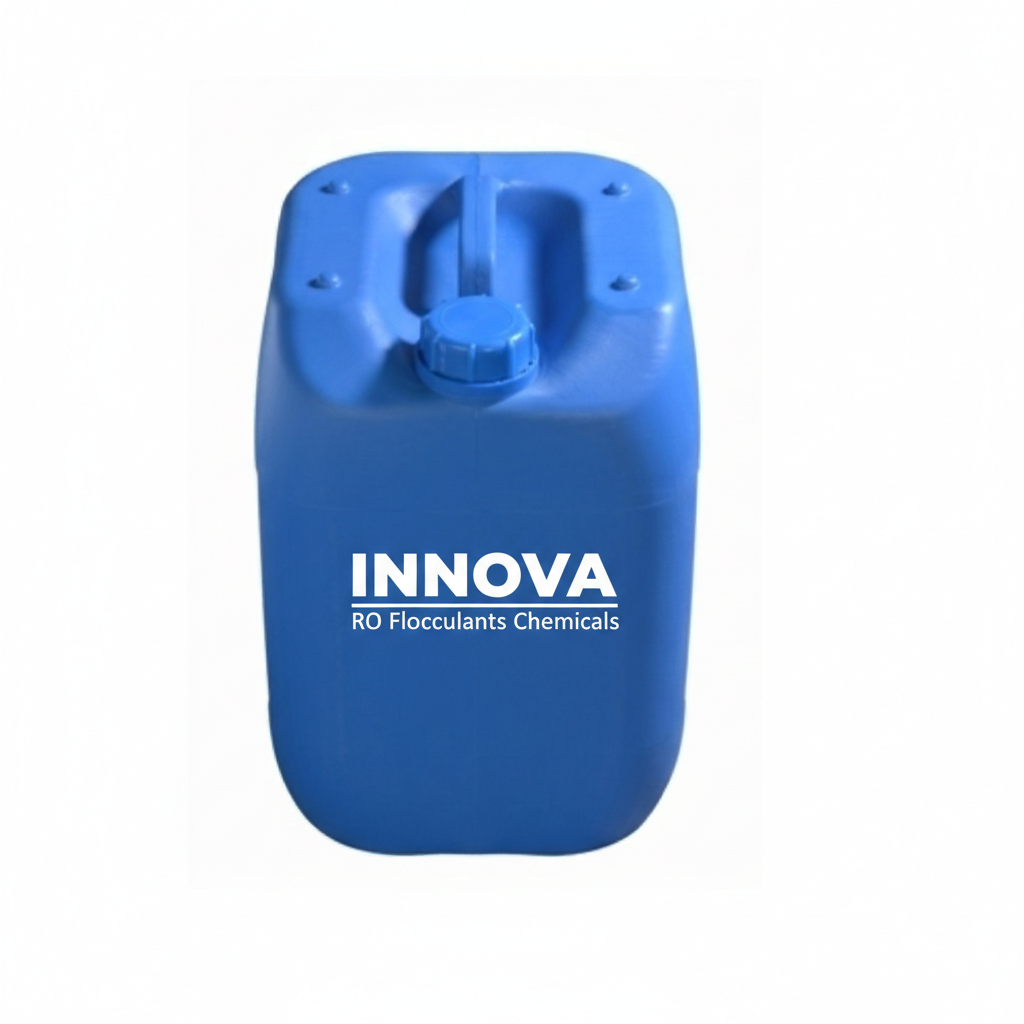
RO Flocculants Chemicals for Nepal's Industrial, Municipal & Bottling Plants
Innova Corporate (India) manufactures premium RO flocculation chemical in Nepal for facilities treating raw water that carries suspended solids and variable turbidity. Nepal's water sources present unique challenges — river intakes from the Bagmati, Koshi and Gandaki systems carry seasonal silt and organic loads, open wells in the Terai belt show elevated iron and mud content, and municipal supplies fluctuate in quality throughout the year. Our flocculants aggregate these fine particles into larger, heavier flocs that settle or get filtered out cleanly during pretreatment, producing consistently clean feed water for RO systems across Nepal.
The core benefit for Nepal plants is Silt Density Index (SDI) reduction. SDI measures the fouling potential of RO feed water, and most membrane manufacturers require SDI below 5 — with values below 3 preferred for long membrane life. Nepal's monsoon season can push raw water SDI from a normal 4–6 up to 15+ within hours of heavy rainfall, causing rapid cartridge filter plugging and membrane fouling if adequate flocculation is not in place. Our formulation keeps SDI within control across these conditions, protecting the expensive membrane elements that represent the largest single investment in any Nepal RO plant.
For Nepal-based industries — from bottling plants in Kathmandu and Birgunj to textile units in Biratnagar, food processing in Pokhara and Butwal, and pharmaceutical facilities in Bharatpur and Hetauda — our flocculants deliver cleaner feed water and a much more reliable water treatment process. The result is longer filter runs, lower operating costs, extended membrane life, and consistent product water quality that meets the requirements of regulated industries.
Key Features & Strategic Benefits for Nepal Industries:
- Iron & Mud Removal: Highly effective against the naturally occurring foulants and suspended solids common in Nepal's groundwater and surface water sources — including iron, clay, silt and fine organic matter.
- Membrane Safety: Fully compatible with all RO, NF and UF membranes used in Nepal industrial units. Does not introduce harmful residuals that could damage polyamide or TFC elements.
- Liquid Convenience: Concentrated liquid product that is safer, simpler and more precise to handle than traditional powder flocculants — an operational advantage for Nepal facilities with limited chemical-handling infrastructure.
- Filtration Boost: Significantly enhances the performance of multi-grade filters, sand filters and cartridge filters by ensuring fine particles are aggregated into larger flocs that the filters can actually capture.
- SDI Control: Drastically reduces the Silt Density Index of feed water — keeping it within membrane-manufacturer limits even during Nepal's monsoon season turbidity spikes.
- Monsoon-Ready Performance: Works effectively across a wide turbidity range — from low-turbidity dry season feed water to high-turbidity monsoon flows — without requiring reformulation or dosing changes.
- Cost Efficiency: Low dosage requirements and improved filter performance combine to reduce total pretreatment chemical and labor costs for Nepal plants.
- Technical Support: Free jar-testing guidance, dosing recommendations and water analysis review for all Nepal clients — critical for optimizing flocculant performance on site-specific water chemistry.
Why Flocculation Is Nepal's First Line of RO Membrane Defense
Every Nepal RO plant faces a choice: spend money on pretreatment flocculants now, or spend more money on membrane replacement later. When raw water carries suspended solids — whether from monsoon runoff, well silt, or municipal supply turbidity — those particles either get captured in pretreatment or they reach the membranes. Cartridge filters alone cannot handle high-turbidity events without plugging in days, and membranes that see high-SDI feed water foul within weeks rather than years. Flocculation solves this by aggregating fine particles into larger flocs that settle in clarifiers or get efficiently captured by sand and multi-grade filters. The result is feed water with SDI below 3 — the threshold for long membrane life — even when raw water SDI is much higher. For Nepal facilities, this is the single most cost-effective investment in membrane protection.
Flocculant Performance: Nepal Water Source Comparison
| Water Source (Nepal) | Typical Raw SDI | After Flocculation | Primary Foulants |
|---|---|---|---|
| Bagmati River (Kathmandu) | 6 – 12 | 2 – 3 | Silt, organic matter, sewage |
| Koshi River (Biratnagar) | 5 – 15 (monsoon higher) | 2 – 3 | Silt, clay, algae |
| Gandaki River (Pokhara) | 4 – 10 | 2 – 3 | Fine silt, glacial flour |
| Terai Open Wells | 3 – 8 | 1 – 2 | Iron, mud, colloidal clay |
| Municipal Supply | 4 – 8 | 2 – 3 | Pipe sediment, organic residuals |
| Monsoon Surface Water | 15 – 30 | 3 – 4 | Heavy silt, runoff solids |
Case Study: Bottling Plant in Birgunj
A 10 m³/hr bottled water facility in Birgunj was drawing raw water from a local well source with variable turbidity and moderate iron content. During monsoon season, feed water turbidity spiked from a normal 8 NTU to over 120 NTU, causing cartridge filters to plug within 3–4 days and pushing SDI above 12 — well beyond the membrane manufacturer's limit of 5. Membrane cleaning was required every 6 weeks and the plant faced regular production interruptions. After introducing Innova's liquid flocculant at 8 ppm dosing upstream of the multimedia filter, SDI stabilized at 2–3 even during monsoon peaks, cartridge filter life extended from 3 days to 3 weeks, and membrane CIP frequency dropped from every 6 weeks to every 4 months. The plant also reported improved product water consistency and reduced chemical consumption overall.
Frequently Asked Questions — RO Flocculants in Nepal
Q1: How is a liquid flocculant better than powder flocculants?
Liquid flocculants offer three key advantages for Nepal plants: safer handling (no dust inhalation
risk), more precise dosing (accurate pump-based control vs manual scooping), and faster dissolution
(already in solution, no mixing time or clumping). Powder flocculants still have a place where
logistics strongly favor dry goods, but for most Nepal facilities the liquid form delivers better
operational reliability.
Q2: How much flocculant does my Nepal plant need during monsoon season?
Monsoon dosing typically runs 30–50% higher than dry season dosing due to increased turbidity and
suspended solids. But the exact dose depends on your specific water source and treatment configuration.
We recommend jar testing at the start of each season to establish optimal dosing for current water
conditions. Our technical team provides free jar-testing guidance for all Nepal clients.
Q3: Can this flocculant be used in drinking water treatment in Nepal?
Yes. The formulation is suitable for potable water applications when dosed per recommended guidelines
and used with proper clarification and filtration. It meets the requirements for municipal water
treatment and bottled water production across Nepal.
Q4: Do you supply RO flocculants across Nepal?
Yes. We supply across Nepal including Kathmandu, Pokhara, Biratnagar, Butwal, Birgunj, Bharatpur,
Hetauda, Dharan and other major cities. Standard packaging of 25 kg, 50 kg, and bulk drums is
available with regular dispatch from India to Nepal via established logistics channels.
Expert Support in Nepal: Proper flocculation is the first line of defense for protecting downstream membranes. Contact our technical team for precise dosing guidelines and comprehensive water analysis for your Nepal-based plant. We provide free jar-testing guidance, seasonal dosing adjustments and ongoing support to keep your pretreatment performing at its best throughout the year.