- 2B / BW Shalimar Bagh, Opp. BQ Market, Near DLF Mall New Delhi - 110088, India.
- :+91-9312-871-070

Manufacturers, Exporters, Suppliers of Peracetic Acid Based RO Disinfectant
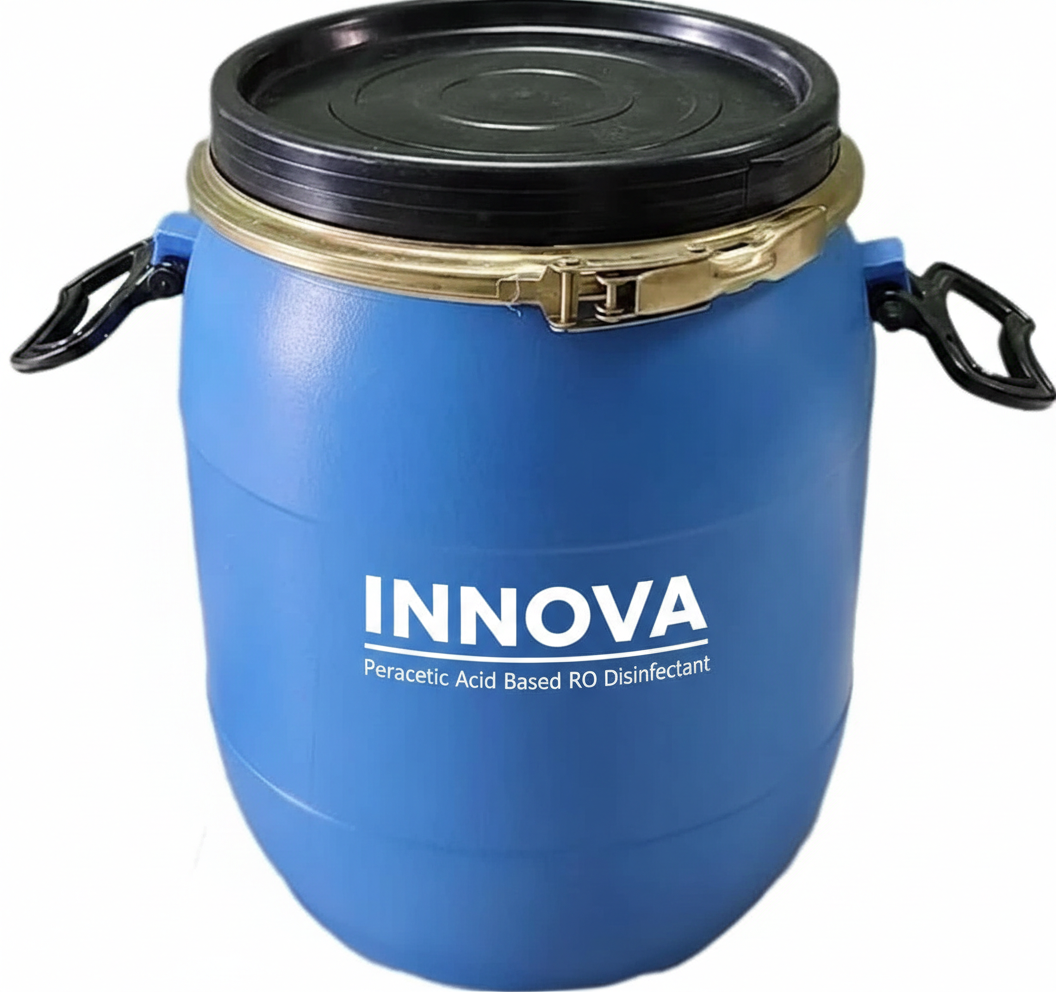
Peracetic Acid Based RO Disinfectant for Qatar's SWRO, IWPP & Industrial Water Systems
Innova Corporate (India) is a premier manufacturer, supplier and exporter of high-purity peracetic acid (PAA) based RO disinfectants in Qatar. We specialize in providing advanced oxidizing microbiocides that ensure total sterilization of water treatment systems across Qatar — from the SWRO and IWPP complexes that supply the country's drinking water to the industrial RO plants serving Qatar's petrochemical, food and pharmaceutical sectors. Our PAA formulations meet stringent industry standards, offering a powerful yet environmentally safe alternative to traditional disinfectants.
Our peracetic acid RO disinfectant in Qatar is a high-efficacy oxidizing agent specifically designed for the rapid disinfection of RO, NF and UF membranes. It is highly effective against a broad spectrum of microorganisms found in Qatar water sources — including bacteria, viruses, molds and spores — and works reliably across the full temperature range of Gulf water conditions. Being safe for potable RO systems, it decomposes into harmless by-products (acetic acid and oxygen), ensuring no toxic residue remains in the treated water. This makes it ideal for facilities producing drinking water, pharmaceutical-grade water or process water where residual chemical contamination is unacceptable.
Key Features & Strategic Benefits in Qatar:
- Broad-Spectrum Microbiocide: Rapidly eliminates pathogens, biofilms and organic slime — the full range of microbial fouling problems encountered in Qatar's SWRO and industrial RO plants.
- Eco-Friendly & Biodegradable: Decomposes naturally without leaving harmful environmental footprints in Qatar — aligned with Qatar National Vision 2030 sustainability goals.
- Chlorine-Free Sterilization: Provides powerful oxidation without the corrosive risks, DBP formation or membrane damage associated with free chlorine.
- Potable Water Approved: Ideal for food, beverage and drinking water RO applications in Qatar, including the country's municipal desalination supply chain.
- High-Temperature Stability: Maintains full antimicrobial activity through Qatar's peak summer conditions when feed water temperatures exceed 35°C — chlorine loses effectiveness in this range.
- Material Compatibility: Safe for use with all high-quality RO membrane components and housings used across Qatar's industrial infrastructure, including stainless steel piping and CIP systems.
- Cold Sterilization: Highly effective even at ambient temperatures, reducing the need for thermal disinfection and simplifying CIP operations.
- Full Program Integration: Works seamlessly alongside our antiscalants, high pH cleaners and other RO chemicals without interference.
Why Qatar's Desalination & Industrial Sector Prefers PAA Disinfectants
Qatar's water infrastructure operates under conditions that make traditional disinfectants problematic. Chlorine loses significant activity at temperatures above 30°C — a range that Gulf feed water exceeds through most of the year. Chlorine also forms regulated disinfection byproducts (trihalomethanes) that are increasingly restricted by environmental regulations. Formalin-based disinfectants, another traditional option, pose worker-safety and carcinogenic concerns that most modern industrial facilities in Qatar have moved away from. Peracetic acid solves all of these issues simultaneously. It maintains full antimicrobial activity at high temperatures, produces no disinfection byproducts, decomposes into harmless acetic acid and oxygen after use, and leaves no residual taste or odor in the treated water. For Qatar's SWRO and IWPP fleet, where a single disinfection cycle may involve thousands of membrane elements, the combination of efficacy, safety and regulatory compliance makes PAA the disinfectant of choice for modern operations.
Peracetic Acid vs Chlorine: Qatar Application Comparison
| Parameter | Chlorine / Hypochlorite | Peracetic Acid (PAA) |
|---|---|---|
| Disinfection Byproducts | THMs, HAAs formed | None — decomposes to acetic acid + O₂ |
| Membrane Compatibility | Damages polyamide/TFC | Safe with all RO membranes |
| High-Temperature Performance (35°C+) | Rapid activity loss | Full efficacy maintained |
| Taste & Odor | Chlorine taste persists | None after rinse |
| Biofilm Penetration | Limited | Deep penetration |
| Worker Safety | Moderate hazard | Low hazard |
| Environmental Impact | Chlorinated byproducts | Biodegradable |
Case Study: IWPP Disinfection Upgrade Near Al Wajba
A large IWPP facility near Al Wajba was using chlorine-based disinfection for its SWRO CIP program but facing two recurring problems: occasional THM (trihalomethane) exceedances during the disinfection cycle that required additional flush time, and inconsistent microbiological results during peak summer months when feed water temperatures exceeded 36°C. The facility switched to Innova's peracetic acid disinfectant at 5% v/v for CIP with a 90-minute soak and continuous dosing of 2.5 ppm for downstream microbial control. Over the next 12 months, the facility reported zero THM exceedances, consistently clean microbiological results across all four seasons, complete elimination of the chlorine taste and odor complaints from downstream users, and simplified CIP operations with one disinfectant replacing the previous chlorine plus bisulfite dechlorination program. The facility also noted reduced equipment corrosion compared to the previous chlorine-based program. The plant has since standardized PAA disinfection across its sister facility in the Dukhan area.
Recommended Dosage & Application in Qatar:
Shock Dose: For immediate system disinfection, use a concentration of 5–10% v/v in the CIP solution. Circulate through the membrane system for 30–60 minutes, then soak for extended contact if required.
Continuous Dose: For round-the-clock microbial control, maintain a maximum of 2.5 ppm on feed water. Continuous dosing is typically used at facilities where biological regrowth between CIP cycles is a concern.
Sanitization Procedure: For plants in Qatar, first sanitize the system with permeate water to remove residual product. Circulate the peracetic acid solution through the RO loop, followed by a flush with a high pH membrane cleaner for 30 minutes. Allow a soak time of 1–2 hours for deep penetration into biofilm layers. Finally, flush the system thoroughly with permeate water until residual PAA is below detection limits before returning the plant to normal service.
Frequently Asked Questions — Peracetic Acid RO Disinfectant in Qatar
Q1: Is peracetic acid suitable for pharmaceutical purified water systems in Qatar?
Yes. Peracetic acid is widely used in pharmaceutical purified water systems globally and is
recognized by pharmacopeial standards for sanitization of RO and EDI systems. It decomposes into
harmless byproducts, does not damage membranes, and does not leave residue that would affect
purified water quality. For Qatar pharma facilities, it's the preferred chemistry for validated
sanitization procedures.
Q2: What safety precautions are required for peracetic acid handling in Qatar?
Peracetic acid is a strong oxidizer and must be handled with appropriate personal protective
equipment — splash goggles, chemical-resistant gloves and protective clothing. Work in
well-ventilated areas only. Store in original vented containers in a cool, dry place away from
heat, direct sunlight and incompatible materials (reducing agents, combustible materials). Refer
to the MSDS for comprehensive safety information specific to your Qatar facility.
Q3: Does peracetic acid damage RO membranes?
No, when used per recommended guidelines. Peracetic acid is compatible with all major TFC,
polyamide and cellulose acetate membranes. Unlike chlorine — which irreversibly oxidizes polyamide
membranes even at low concentrations — peracetic acid acts through a different mechanism that does
not degrade the active layer. Long-term studies show no measurable membrane performance loss when
PAA is used correctly.
Q4: Do you supply peracetic acid disinfectant across Qatar?
Yes. We supply across Qatar including Al Thumama, Al Mansoura, Al Ghanim, Old Airport and Al Hilal
through Hamad Port. Standard packaging of 25 kg, 250 kg and bulk drums is available with regular
dispatch from India. Bulk pricing and consolidated shipments are available for multi-site operators.
Storage & Safety: Peracetic acid is a strong oxidizer. Store in original vented containers in a cool, well-ventilated area in Qatar away from heat, direct sunlight and incompatible materials. Do not allow the product to freeze. Handle only with proper PPE and in well-ventilated spaces. Please consult the Material Safety Data Sheet (MSDS) and Technical Data Sheet (TDS) for specific handling and safety protocols before use.