- 2B / BW Shalimar Bagh, Opp. BQ Market, Near DLF Mall New Delhi - 110088, India.
- :+91-9312-871-070

Manufacturers, Exporters, Suppliers of Silica Antiscalant High pH
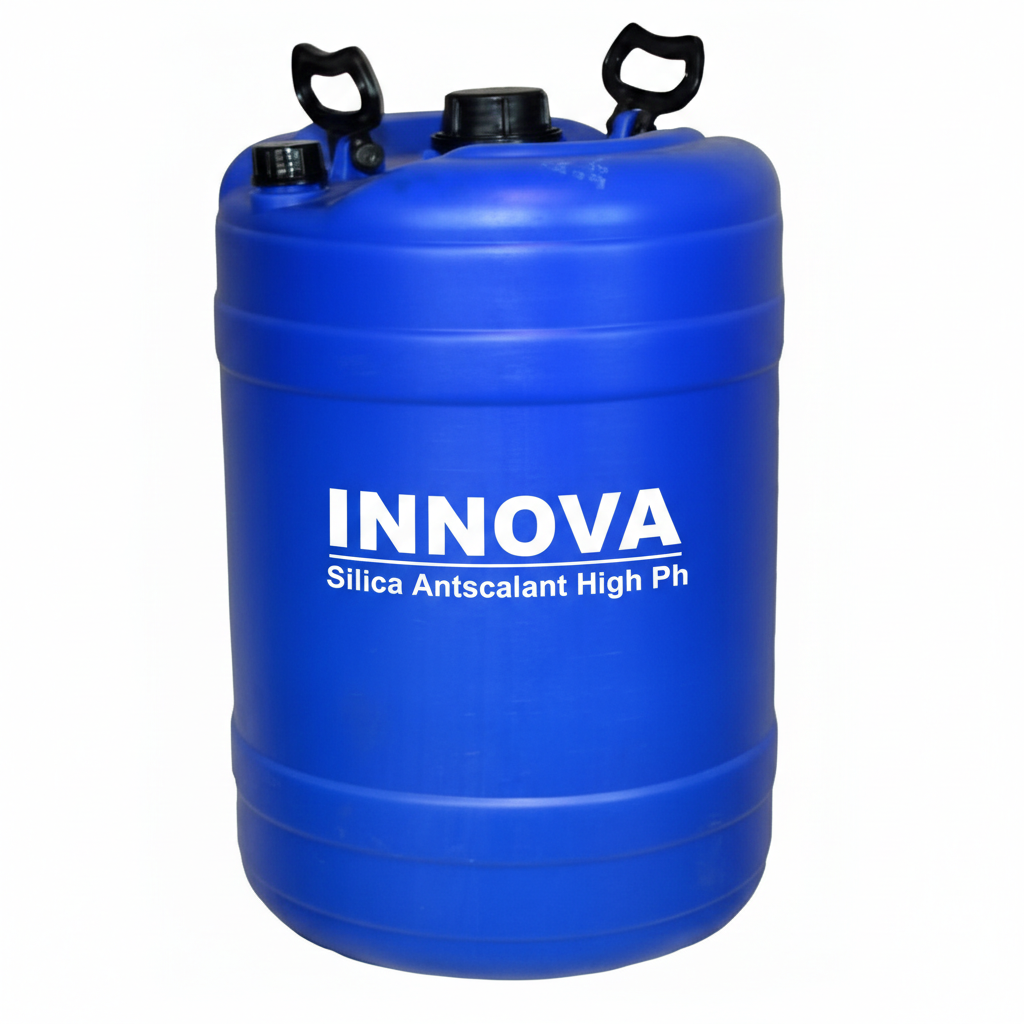
Silica Antiscalant in Taiwan (High pH)
Innova Corporate (India) is a specialised manufacturer and supplier of High pH Silica Antiscalants in Taiwan. Silica fouling is one of the most severe challenges in RO operations because it forms a hard, glass-like scale that resists standard acid cleaning. In Taiwan, the challenge is compounded by the country's unique water landscape — the Formosan mountain geology releases dissolved silica into surface water sources, typhoon-season rainfall mobilises sediment and organic matter into reservoirs, and the semiconductor industry's ultrapure water requirements demand silica control at levels that standard antiscalants cannot achieve. Our advanced alkaline formulation is specifically engineered to inhibit silica precipitation for Taiwan industrial units, ensuring smooth operation even in water with high reactive silica content.
Our Silica Antiscalant in Taiwan is a high-performance alkaline product that is fully compatible with drinking water systems. By keeping silica in suspension, it prevents membrane plugging, reduces the frequency of chemical cleanings (CIP), and significantly extends the life of RO membranes in Taiwan. The formulation is designed for the silica concentrations that Taiwanese semiconductor fabs, municipal water plants and industrial facilities encounter — including the elevated reactive silica from central mountain sources and the seasonal variability that comes with Taiwan's monsoon and typhoon seasons.
Taiwan's semiconductor manufacturing is the most demanding application for silica antiscalant anywhere in the world. Fabs in Hsinchu, Taichung and Tainan require ultrapure water with silica concentrations below parts-per-billion levels, and they operate RO systems at high recovery to maximise water efficiency. At those recovery rates, silica concentrates dramatically in the reject stream, and any polymerisation that occurs will deposit on the membrane and compromise permeate quality. Our high pH formulation maintains silica dispersion across the full concentration range, allowing semiconductor plants to operate at the recovery rates they need without risking silica breakthrough.
Key Benefits & Salient Features for Taiwan:
- Superior Silica Control: Effectively manages high levels of reactive silica in Taiwan feedwater across the full concentration range, including the elevated silica from central mountain sources.
- Semiconductor-Grade Compatible: Suitable for ultrapure water systems in Taiwanese fabs, with documentation supporting the purity requirements of semiconductor manufacturing.
- Typhoon-Season Resilience: Handles the feedwater variability that follows typhoon events, when reservoir turbidity and organic load spike within hours.
- Membrane Protection: Prevents irreversible physical damage caused by sharp silica crystals, protecting the significant membrane investment in Taiwanese plants.
- High Recovery Capable: Maintains effective silica dispersion at the elevated concentration factors typical of high-recovery semiconductor and industrial RO systems.
- Drinking Water Safe: Formulated with ingredients suitable for potable water applications, with documentation aligned with Taiwanese drinking water standards.
- Cost-Efficiency: Minimises downtime and reduces the need for expensive silica-specific cleaning cycles that rarely achieve full membrane recovery.
Taiwan Water Sources & Silica Control Context:
- Formosan Mountain Surface Water: Central mountain reservoirs carry dissolved silica from the geological formations that make up Taiwan's spine. Silica concentrations typically range from 15 to 40 ppm depending on location and season.
- Typhoon-Season Reservoir Water: Post-typhoon feedwater carries elevated turbidity, organic matter and colloidal silica from catchment runoff, requiring enhanced dispersion chemistry.
- Semiconductor Fab Ultrapure Water: Hsinchu, Taichung and Tainan fabs operate at high recovery with stringent silica limits, requiring the most demanding silica control.
- Municipal Surface Water: Taipei, Kaohsiung and other urban centres draw from reservoirs and rivers with variable silica content depending on season.
- Industrial Groundwater: Some industrial facilities draw from wells with elevated silica from deep geological formations.
- Recycled Industrial Water: Water reuse programs progressively concentrate silica through multiple treatment cycles.
Strategic Benefits Delivered to Taiwanese Plants:
Application & Dosage in Taiwan:
- Dosage Range: The usual dosage for silica antiscalant ranges from 2–10 ppm. In severe conditions or smaller installations in Taiwan, this may increase up to 15 ppm. Semiconductor fabs operating at high recovery may require doses at the upper end of this range to maintain silica dispersion across the concentration factor.
- Storage: Store in original containers in a cool, dry place in Taiwan away from heat, flame, and direct sunlight. Taiwan's subtropical climate is generally suitable for storage in shaded warehouses, though summer heat and humidity require attention to container sealing.
- Technical Support: Please refer to the Technical Data Sheet (TDS), Label and MSDS for comprehensive details on safety and shelf life. Documentation aligned with Taiwanese drinking water standards and semiconductor industry requirements is available on request. We recommend consulting an Innova representative to determine the optimal dosage based on your water analysis.
Frequently Asked Questions — High pH Silica Antiscalant in Taiwan
1. Why does Taiwan's water require a high pH silica antiscalant?
Taiwan's water sources carry elevated dissolved silica from two geological and climatic factors. The Formosan mountain range that forms the spine of the island is composed of sedimentary and metamorphic rocks that release silica into surface water through weathering. This silica accumulates in reservoirs and rivers, reaching concentrations of 15 to 40 ppm depending on location and season. Additionally, Taiwan's heavy rainfall — particularly during the typhoon season from June to October — mobilises sediment and colloidal material that further increases silica load. High pH silica antiscalant is the most effective approach because silica solubility increases significantly at elevated pH, and the alkaline formulation keeps silica in solution across the full concentration range of high-recovery RO systems.
2. How is silica control different for Taiwanese semiconductor fabs?
Semiconductor manufacturing requires ultrapure water with silica concentrations below parts-per-billion levels. Any silica that reaches the permeate can affect wafer processing and reduce yield. Taiwanese fabs in Hsinchu, Taichung and Tainan operate RO systems at high recovery to maximise water efficiency, which concentrates silica dramatically in the reject stream. The antiscalant must maintain silica dispersion across this full concentration range without allowing any polymerisation that could compromise permeate quality. Our high pH formulation is designed for these demanding conditions, with documentation supporting the purity requirements of semiconductor manufacturing.
3. How does typhoon season affect silica scaling in Taiwan?
Typhoon season runs from June to October in Taiwan, and the storms bring intense rainfall that mobilises sediment, organic matter and colloidal silica into reservoirs and rivers. Feedwater turbidity can spike dramatically within hours of a typhoon, and the colloidal silica load increases along with the mineral content. Standard antiscalants may not handle this variability because they are optimised for steady-state conditions. Our formulation includes dispersants specifically active against colloidal silica, maintaining effectiveness across the full range of typhoon-season feedwater conditions. For plants that see significant variability, we recommend periodic monitoring and dose adjustment based on feedwater analysis.
4. How does high pH help with silica control?
Silica solubility increases significantly at higher pH. At neutral pH around 7, dissolved silica saturates at roughly 100 to 140 ppm depending on temperature. At pH above 8.5, this limit rises to 300 ppm or more because the silicate ion becomes more stable in solution. Our high pH silica antiscalant is designed to work across this elevated pH range, keeping silica soluble even at the high recovery rates that Taiwanese semiconductor and industrial plants operate at. The trade-off is that high pH increases carbonate scaling risk, which our formulation addresses alongside silica control.
5. What is the difference between reactive silica and colloidal silica in Taiwan's water?
Reactive silica is dissolved silica — silicic acid and silicate ions in true solution. It is what most antiscalants are formulated to control, and it is measured in standard water analysis. Colloidal silica is much larger — suspended particles of polymerised silica ranging from nanometres to microns in size. Taiwan's typhoon-season runoff mobilises colloidal silica from catchment soils, and reservoirs can carry both forms simultaneously. Our formulation includes dispersants that handle both reactive silica polymerisation and colloidal silica particles, so plants remain protected across the full range of feedwater conditions.
6. How do I know if my Taiwanese RO system has silica scaling?
Silica scaling has a distinct signature. Normalized permeate flow declines gradually but persistently, and the decline does not respond fully to standard acid CIP. Differential pressure rises more slowly than with organic fouling. Autopsy of a fouled element reveals a hard, glassy deposit that does not dissolve in acid but may partially dissolve in strong alkali. If your system shows these signs and your feedwater analysis reports silica above 20 ppm, silica scaling is likely contributing to performance loss. We help clients confirm the diagnosis through water analysis and autopsy findings.
7. Can the high pH silica antiscalant handle the recycled water systems used in Taiwanese industry?
Yes. Many Taiwanese industrial facilities operate water reuse programs that progressively concentrate silica through multiple treatment cycles. Each cycle raises the silica concentration further, and without effective control, the system reaches scaling conditions that prevent high recovery. Our high pH silica antiscalant is designed for this cyclical operation, maintaining silica dispersion across the increasing concentrations of a reuse system. For facilities with aggressive water recycling programs, we recommend periodic water analysis to track silica accumulation and adjust dose accordingly.
8. What documentation do you provide for Taiwanese regulatory compliance?
Every shipment to Taiwan includes Material Safety Data Sheet (MSDS), Technical Data Sheet (TDS), Certificate of Analysis (COA) and dosing guidelines. For potable water applications, we provide documentation aligned with Taiwanese drinking water standards and the Environmental Protection Administration (EPA Taiwan) regulatory framework. For industrial discharge, we supply information suitable for EPA Taiwan reporting. For semiconductor applications, additional purity and residue documentation is available on request. Documentation is in English, with Chinese summaries available through our local partners.
9. Is the high pH silica antiscalant safe for drinking water applications in Taiwan?
Yes. Our high pH silica antiscalant is formulated using food-grade raw materials and is suitable for potable water applications when dosed at recommended levels. We provide documentation aligned with Taiwanese drinking water standards and the EPA Taiwan regulatory framework. After treatment, the antiscalant remains on the feed side of the membrane and exits with the concentrate, so permeate quality is unaffected. For potable water applications, residual concentrations in the permeate are typically below detection limits at recommended doses.
10. How do you ship high pH silica antiscalant to Taiwan?
We ship from Indian ports to Kaohsiung, Keelung, Taichung and Taipei, covering Taiwan's main commercial ports. All shipments include commercial invoice, packing list, certificate of origin, MSDS and any certificates required by Taiwanese Customs and the Bureau of Standards, Metrology and Inspection (BSMI). High pH formulations are alkaline materials and are packed in UN-approved containers with proper classification and labelling where required. We work with freight forwarders experienced in Taiwanese import procedures and can support clients through customs clearance and standards compliance.