- 2B / BW Shalimar Bagh, Opp. BQ Market, Near DLF Mall New Delhi - 110088, India.
- :+91-9312-871-070

Manufacturers, Exporters, Suppliers of RO Membrane Cleaner
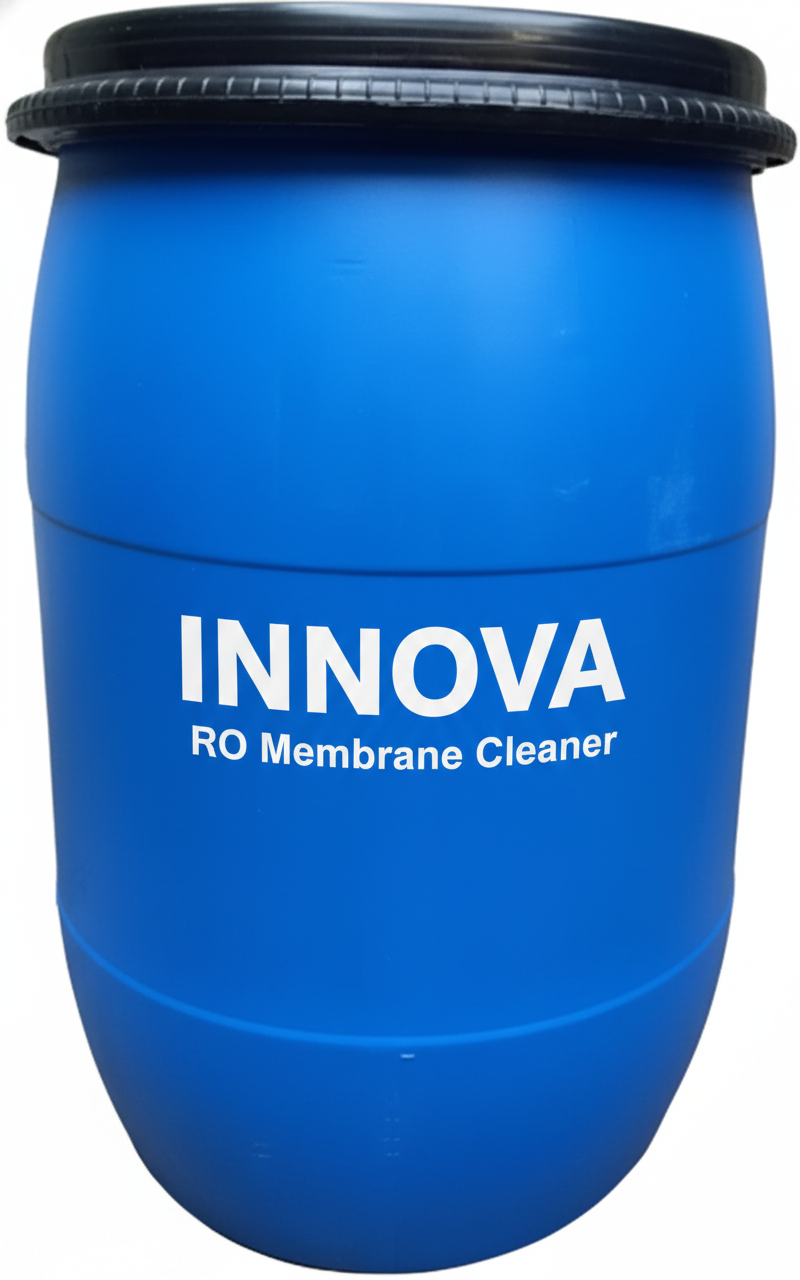
RO Membrane Cleaner Chemicals for Tanzania Plants (Complete CIP Range, TBS & NEMC Compliant)
Tanzania's industrial RO plants face one of the most diverse fouling environments in East Africa — and they operate under a specific regulatory framework. Mining operations in Geita, Kahama, and Arusha generate ore-processing effluent with fine mineral particles and organic reagents that accumulate on membranes. Cement plants in Dar es Salaam, Tanga, and Mbeya develop combined oil-and-biofilm fouling in recirculating cooling water systems. Rift Valley groundwater in Dodoma, Arusha, and Mbeya carries naturally high iron and fluoride that create combined scaling on membranes. And Lake Victoria water near Mwanza carries seasonal algae and organic sediment that concentrate through RO treatment. Innova Corporate (India) supplies a complete range of RO membrane cleaner chemicals for Tanzania plants, formulated to comply with TBS (Tanzania Bureau of Standards) requirements for water treatment chemicals and with NEMC (National Environment Management Council) discharge regulations.
Our range covers every fouling type Tanzania plants encounter: acidic cleaners for mineral scale, iron oxide, and silica from Rift Valley groundwater and mining effluent; alkaline cleaners for biofilm, oils, and organic matter from mining and cement cooling water; specialised iron-fouled and silica-fouled membrane cleaners for extreme conditions at Geita and Kahama operations; preservatives for shutdown periods; and dechlorination chemicals for pretreatment. Each product is formulated with premium-grade constituents and validated for the specific pH, temperature, and contact time requirements of polyamide, cellulose acetate, and thin-film composite (TFC) membranes used across Tanzania's mining, cement, food processing, and municipal plants.
Correct CIP chemical selection directly determines your RO plant's operating cost. Wrong cleaner choice wastes chemical, extends downtime, and can damage membranes. Correct choice restores flux to near-design values in a single cycle, reduces cleaning frequency from monthly to quarterly, and extends membrane life by 2 to 3 years. For Tanzania plants — where mining effluent and cement cooling water create combined fouling that standard cleaners handle poorly — this shows up clearly in cost per cubic meter of permeate and in TBS audit outcomes.
Our Specialized CIP Range for Tanzania Plants:
- Low pH Membrane Cleaner
- High pH Membrane Cleaner
- Iron Fouled Membrane Cleaner
- Silica Fouled Membrane Cleaner
- RO Membrane Preservative
- RO Dechlorination Chemicals
Key Features of Our Tanzania CIP Range: All formulations are low-foaming for high-velocity recirculation CIP, precisely buffered to protect membranes across the recommended pH and temperature range, and fully biodegradable for compliance with NEMC discharge norms and Tanzania's environmental reporting requirements. They maintain full efficacy at Tanzania's varied climate zone temperatures — from coastal Dar es Salaam at 25°C to 35°C to highland Arusha at 12°C to 25°C — so no heated CIP or seasonal adjustment is required. They provide excellent system clean-up for Tanzania's mining operations at Geita and Kahama, cement plants in Dar es Salaam and Tanga, food processing units in Mwanza, and municipal water utilities in Dodoma. Regular use prevents irreversible membrane damage and reduces overall operating costs by lowering CIP frequency and extending membrane replacement cycles.
Recommended Applications in Tanzania: Gold and tanzanite mining operations in Geita, Kahama, and Arusha for effluent and cooling water fouling; cement plants in Dar es Salaam, Tanga, and Mbeya for cooling water oil and biofilm removal; Rift Valley groundwater treatment plants in Dodoma, Arusha, and Mbeya for iron-fluoride fouling; food processing and beverage bottling in Dar es Salaam and Mwanza; Lake Victoria water treatment plants in Mwanza facing seasonal algae; and municipal water utilities across Tanzania.
Choosing the Right Cleaner for Your Tanzania Plant: The correct CIP program depends on your specific feed water analysis and membrane fouling history. Most Tanzania plants need a two-step protocol — alkaline first for biofilm, oils, and organics, acidic second for mineral scale, iron, and silica. Mining operations in Geita and Kahama with combined mineral and organic fouling need both stages at regular intervals. Rift Valley groundwater plants in Dodoma and Arusha need the dedicated iron-fouled cleaner for the region's characteristic iron-fluoride scaling. And plants with long shutdown periods — common in mining and cement operations during maintenance cycles — need preservative as a separate stage.
For customised CIP (Clean-In-Place) protocols and to select the right cleaner for your specific water analysis, contact our technical service engineers. We provide free protocol guidance for Tanzania plants — including alkaline-acid sequence, dilution ratios, contact time, temperature limits, and post-cleaning flush procedure — tailored to your membrane model, fouling type, and TBS/NEMC regulatory requirements.
Storage & Handling: Store all products in original sealed containers in a cool, dry, well-ventilated area at your Tanzania facility, away from direct sunlight, heat sources, and incompatible materials. During the rainy season (March to May), keep containers off damp floors and away from condensation. Use appropriate PPE during handling. Refer to the Material Safety Data Sheet (MSDS) and Technical Data Sheet (TDS) for each product for complete safety and application details — both compliant with Tanzania regulatory documentation requirements.
Export & Technical Support for Tanzania: We ship regularly to the Port of Dar es Salaam, Tanzania's largest port, and the Port of Tanga, with onward transport to Dodoma, Mwanza, Arusha, Mbeya, and other industrial cities across Tanzania. All shipments include complete customs documentation, MSDS, and TDS. Our technical team helps you select the right cleaner combination for your plant — a service we provide free of cost.