- 2B / BW Shalimar Bagh, Opp. BQ Market, Near DLF Mall New Delhi - 110088, India.
- :+91-9312-871-070

Manufacturers, Exporters, Suppliers of High Silica RO Antiscalant
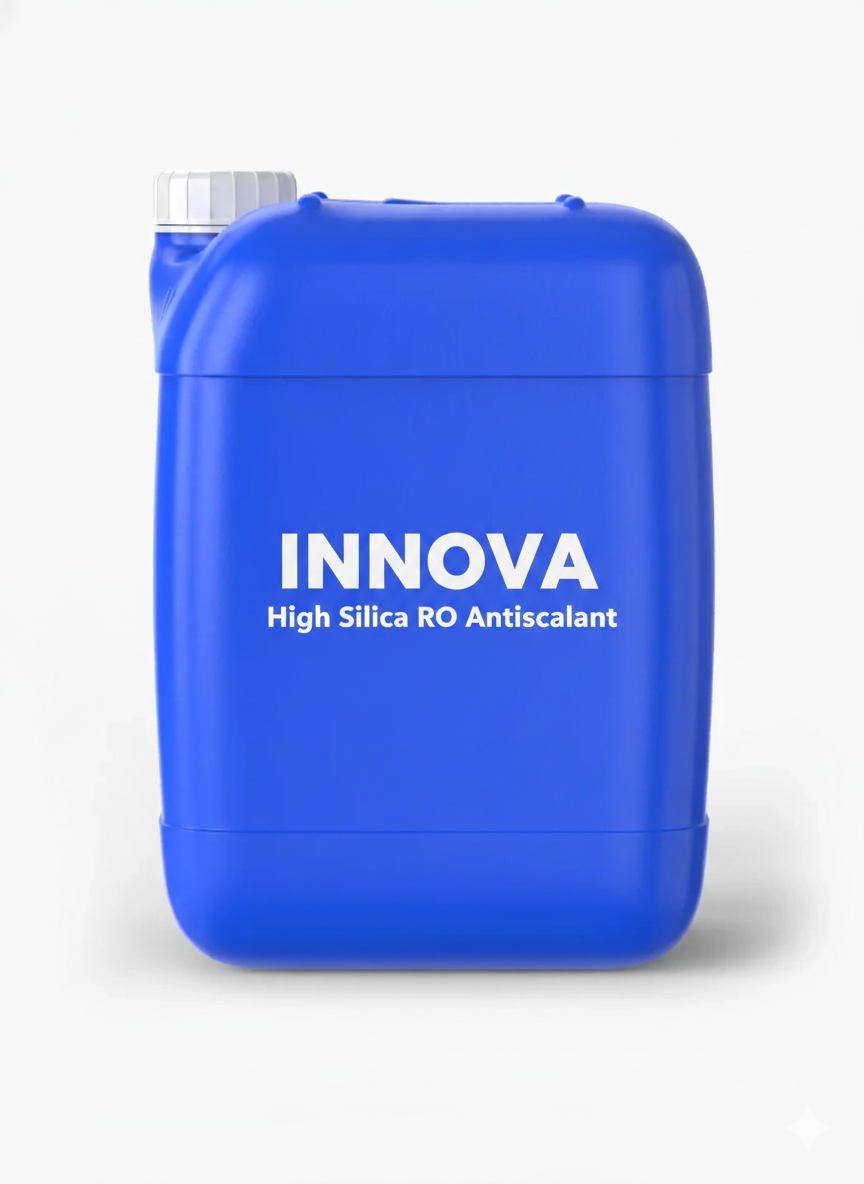
High Silica RO Antiscalant in Germany for Chemical & Food Processing RO Plants (Broad-Spectrum Mixed Fouling Control)
Innova Corporate (India) supplies High Silica RO Antiscalant in Germany for chemical plant process water in Ludwigshafen and Leverkusen, food processing RO in Bavaria and Lower Saxony, and industrial cooling make-up RO in North Rhine-Westphalia. German chemical and food processing plants use mixed-source process water containing both silica and carbonate hardness — a combination that standard antiscalants cannot handle. Our broad-spectrum silica antiscalant controls silica polymerization plus carbonate, sulfate and iron oxide scaling in a single formulation, ensuring your RO system operates at high recovery rates without compromising membrane integrity.
Our specialised broad-spectrum silica antiscalant is designed for high-capacity membrane systems operating in German chemical and food processing plants. It features a precise molecular weight range and a clear, impurity-free composition. This advanced formula effectively controls silica scaling up to 325 ppm in the concentrate stream, while also preventing carbonate and sulfate scaling (Calcium, Magnesium, Barium and Strontium) and iron fouling common in mixed-source German process water. Whether for Reverse Osmosis (RO), Nanofiltration (NF) or Ultrafiltration (UF), our chemicals deliver exceptional results across a wide range of German industrial applications.
Key Features & Strategic Benefits for German Chemical & Food Processing Plants:
- Extreme Silica Inhibition: Effectively controls silica scales up to 325 ppm in the concentrate stream — critical for Ludwigshafen chemical plant process water.
- Broad-Spectrum Mixed Fouling Control: Handles silica, carbonate, sulfate and iron oxide scaling in a single product — no need for multiple antiscalants in mixed-source German process water.
- Iron Sequestration: Advanced formula prevents iron fouling, a common issue in German mixed-source process water and cooling make-up.
- High Recovery Rates: Allows German chemical and food RO systems to operate at higher recovery levels without compromising membrane integrity.
- Broad pH and TDS Tolerance: Works across a wide range of pH, TDS and high SDI (Silt Density Index) water in German industrial plants.
- Cost Optimisation: Low dosage requirements (2–20 ppm) result in significant operational savings for German facilities.
- Environmental Safety: Completely organic, biodegradable and compatible with all membrane types — meeting German and EU environmental standards.
- DVGW & EU Compliant: Formulated to comply with DVGW guidelines for potable water treatment and EU environmental discharge standards.
Industries We Serve Across Germany:
Chemical Plants (Ludwigshafen, Leverkusen): BASF, Bayer and other chemical facilities use broad-spectrum silica antiscalant for process water RO with mixed silica and carbonate fouling.
Food Processing (Bavaria, Lower Saxony): German food processing plants use broad-spectrum silica antiscalant for process water RO in regions with elevated silica and hardness.
Industrial Cooling Make-up (North Rhine-Westphalia): Chemical and steel plants in Cologne and Düsseldorf use broad-spectrum silica antiscalant for cooling make-up RO with high silica concentration.
Textile Processing (Baden-Württemberg): Textile plants use broad-spectrum silica antiscalant for effluent and process water RO with mixed fouling.
Breweries & Beverage (Bavaria): Bavarian breweries use broad-spectrum silica antiscalant for process water RO with both silica and carbonate hardness.
Power Plant Boiler Feed (NRW): Power plant boiler feed RO systems use broad-spectrum silica antiscalant to prevent silicate carryover into boilers.
Broad-Spectrum vs Standard Silica Antiscalant — Why German Mixed-Source Water Needs Broad-Spectrum:
| Parameter | Standard Silica Antiscalant | Broad-Spectrum Silica Antiscalant |
|---|---|---|
| Silica Control | Yes | Yes |
| Carbonate Control | No — requires separate antiscalant | Yes — built-in |
| Sulfate Control | No | Yes |
| Iron Control | Limited | Yes — chelation |
| Best For in Germany | Single-source silica water | Mixed-source chemical and food process water |
Dosage & Application Guide for German Chemical & Food Processing Plants:
- Standard Dosage: 2–8 ppm in feed water, depending on silica concentration, carbonate hardness, recovery rate and temperature.
- Chemical Plant Process Water (Ludwigshafen): For mixed silica and carbonate fouling, dosage may go up to 10 ppm.
- High Iron (0.5–1.0 ppm): Increase dosage by 5–7 ppm to stabilise the system against iron-rich German process water.
- Extreme Silica (up to 325 ppm): A dosage of 10–15 ppm is recommended for full inhibition in the concentrate stream.
- Injection Point: Dose directly into the RO feed water tank or line after pretreatment, before the cartridge filter.
- Dilution: Always dilute with RO permeate water, not raw water, before dosing.
- Monitoring: Track silica, LSI, SDI, differential pressure and permeate flow to confirm antiscalant effectiveness.
Common Mixed-Fouling Problems in German Chemical & Food Processing RO Systems:
Mixed Silica and Carbonate Fouling: Ludwigshafen and Leverkusen chemical plants use mixed-source process water with both silica and carbonate hardness. Standard antiscalants handle only one type — broad-spectrum formulation handles both.
Silica-Iron Combined Fouling: German process water often contains both silica and iron. Broad-spectrum silica antiscalant chelates iron while preventing silica polymerization in a single product.
High-SDI Water: Food processing plants in Bavaria and Lower Saxony face high-SDI process water. Broad-spectrum silica antiscalant works across a wide SDI range.
Cooling Make-up Silica Concentration: NRW chemical and steel plant cooling towers concentrate silica at high recycle rates. Broad-spectrum silica antiscalant prevents silicate scaling.
Textile Effluent Silica: Baden-Württemberg textile plants face silica and organic fouling in effluent RO. Broad-spectrum silica antiscalant handles both.
CIP Difficulty: Once silica has polymerized, standard CIP chemicals cannot fully remove it. Prevention with broad-spectrum silica antiscalant is the most effective strategy.
Technical Specifications:
| Appearance | Clear to pale yellow liquid |
| pH (as is) | 10.0 – 12.0 (alkaline) |
| Specific Gravity | 1.08 – 1.18 |
| Silica Tolerance (Concentrate) | Up to 325 ppm (mg/L) |
| Iron Tolerance (Concentrate) | Up to 1.5 ppm |
| Recommended Dosage | 2 – 20 ppm in feed water |
| Certification | DVGW compliant, EU environmental standards |
| Shelf Life | 12 months in original sealed container |
Frequently Asked Questions (Germany):
Q: What is high silica RO antiscalant used for in Germany?
A: It is used for chemical plant process water in Ludwigshafen, food processing RO in Bavaria, and industrial cooling make-up in North Rhine-Westphalia. It handles mixed silica and carbonate fouling in high-TDS feed water.
Q: Why do German chemical and food processing plants need broad-spectrum silica antiscalant?
A: German chemical plants in Ludwigshafen and food processing plants in Bavaria use mixed-source process water containing both silica and carbonate hardness. Standard antiscalants handle only one type. Broad-spectrum silica antiscalant controls both.
Q: Which German industries use high silica antiscalant the most?
A: Chemical plants in Ludwigshafen and Leverkusen, food processing plants in Bavaria and Lower Saxony, industrial cooling make-up RO in North Rhine-Westphalia, and textile processing RO in Baden-Württemberg.
Q: How is broad-spectrum silica antiscalant different from standard silica antiscalant?
A: Standard silica antiscalant controls silica polymerization only. Broad-spectrum silica antiscalant controls silica polymerization plus carbonate, sulfate and iron oxide scaling in a single formulation.
Q: What dosage of high silica antiscalant is recommended for German plants?
A: Typical dosage is 2–8 ppm in feed water. For chemical plant process water in Ludwigshafen, dosage may go up to 10 ppm. Our technical team provides free dosage guidance.
Q: Do you supply high silica antiscalant across German industrial regions?
A: Yes, we supply to chemical, food processing, textile and industrial RO plants across Germany, including Ludwigshafen, Leverkusen, Cologne, Düsseldorf, Munich, Nuremberg, Stuttgart and Mannheim.
Storage & Stability: Store in original, tightly sealed containers in a cool and dry environment at your Germany facility. Protect from direct sunlight and heat sources to maintain chemical potency. As an alkaline product, wear chemical-resistant gloves, goggles and apron during handling. For detailed application guidelines and safety protocols, please refer to the Technical Data Sheet (TDS) and Material Safety Data Sheet (MSDS).
Related Products: Explore our Phosphonate-Free RO Antiscalant for Germany, Ultra-Low TOC Antiscalant, and High pH Silica Antiscalant for a complete RO chemical programme across Germany.