- 2B / BW Shalimar Bagh, Opp. BQ Market, Near DLF Mall New Delhi - 110088, India.
- :+91-9312-871-070

Manufacturers, Exporters, Suppliers of RO Disinfectant Chemicals
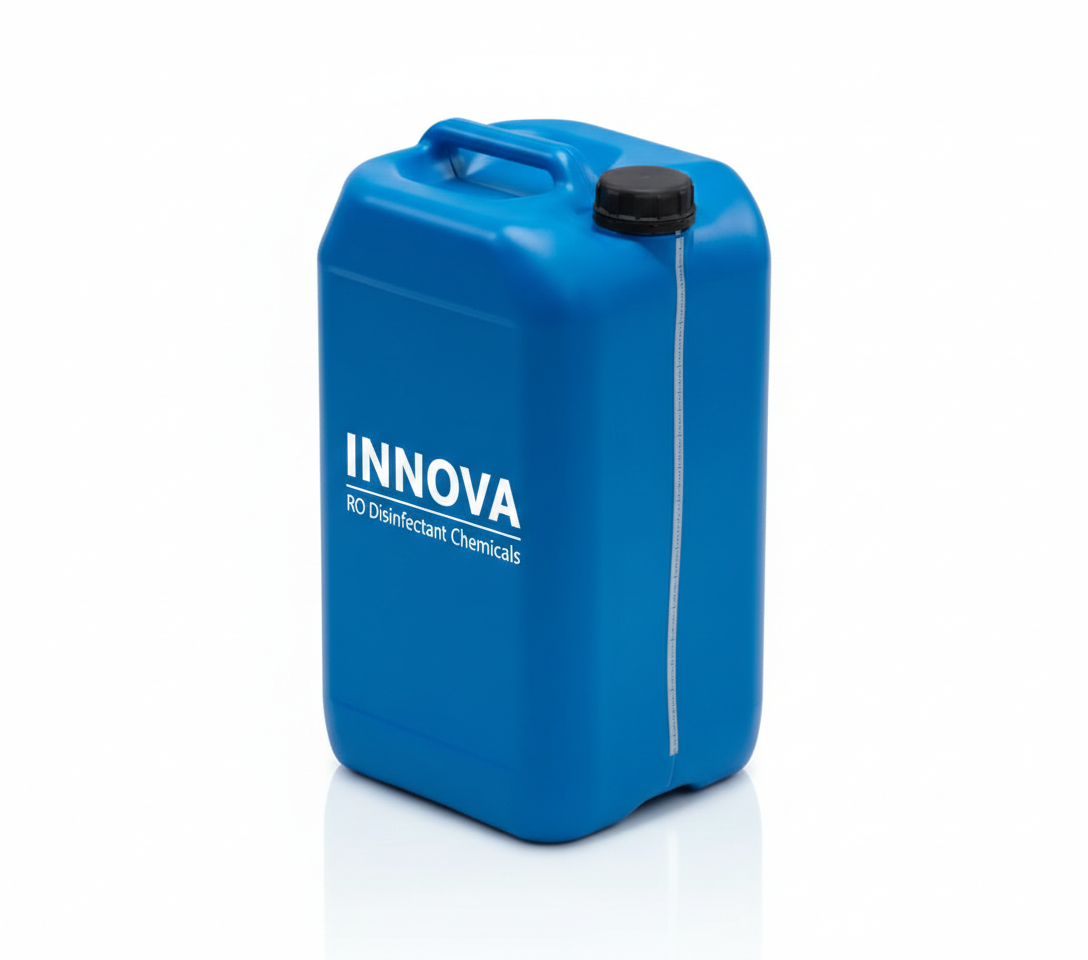
RO Disinfectant Chemicals for Myanmar Plants (Non-Oxidizing Microbiocide)
Myanmar's tropical climate creates a microbial problem that RO plants in cooler countries simply don't face. Feed water temperature in Yangon, Bago, and the delta region stays between 28 and 34°C for most of the year — the ideal range for bacterial growth. Without continuous biocide treatment, biofilm can form in pretreatment lines and on membrane surfaces within 10–14 days. Innova Corporate (India) manufactures this RO disinfectant for Myanmar plants specifically to control that year-round microbial load without damaging polyamide membranes.
The formula is non-oxidizing — meaning it kills bacteria, fungi, and algae without attacking the membrane polymer itself. This is critical because chlorine-based disinfectants, often used in Myanmar municipal water treatment, irreversibly degrade polyamide and TFC membranes at the ppm levels needed for effective disinfection. This product achieves the same microbial control while being safe for continuous feed-stream dosing.
It is a practical choice for Myanmar's pharmaceutical and cosmetic manufacturing units in Yangon where microbial limits are strictly regulated, for beverage bottlers in Mandalay where product quality depends on sterile RO permeate, and for potable water RO systems across the country that need disinfection without introducing harmful residuals.
Key Features for Myanmar Industries:
- Broad-Spectrum Microbial Control: Effective against bacteria, fungi, and algae common in Myanmar's borewell, river, and delta feed water sources — prevents biofouling and pressure drop across the RO train.
- Potable Water Safe: Certified safe for use in RO systems producing drinking water for Myanmar communities when dosed as per guidelines — no harmful residuals after treatment.
- Non-Oxidizing Formula: Unlike chlorine or hypochlorite, it does not oxidize or degrade polyamide, cellulose acetate, or TFC membranes used across Myanmar's industrial RO fleet.
- Eco-Friendly & Biodegradable: Environmentally responsible formulation that breaks down safely after use — compliant with Myanmar's wastewater discharge norms.
- Total System Compatibility: Fully compatible with all RO membrane components, housings, high-pressure pumps, and CIP skids used in Myanmar plants.
- Monsoon-Ready Performance: Maintains efficacy even when feed water turbidity and organic load spike during Myanmar's May–October monsoon season.
Application & Dosage for Myanmar Plants:
Dosage depends on the severity of biological fouling in your system. We recommend two primary methods for Myanmar facilities:
- Shock Dosing (Immediate Disinfection): Use a concentration of 5–10% v/v for rapid system sterilisation during shutdowns — ideal for Myanmar plants restarting after monsoon-season downtime.
- Continuous Dosing (Preventative): Maintain a concentration of 2.5 ppm in the feed water for round-the-clock microbial control — standard practice for Yangon pharma and Mandalay beverage plants.
Recommended Membrane Cleaning Protocol for Myanmar:
- Disinfect the system with Innova RO Disinfectant.
- Flush thoroughly with permeate water.
- Circulate a High pH Membrane Cleaner solution for 30 minutes, then soak for 1–2 hours.
- Final flush with permeate water before returning the Myanmar plant to normal service.
*Note: In multi-pass systems, clean each pass individually for the best results. Replace cleaning solutions if they become excessively turbid.*
Recommended Applications in Myanmar: Yangon pharmaceutical and cosmetic manufacturing units with strict microbial limits; Mandalay beverage bottlers and food processing plants requiring sterile RO permeate; Naypyidaw institutional and potable water treatment systems; Bago agro-processing facilities with high organic load in feed water; delta-region plants in Pathein facing seasonal microbial spikes during monsoon.
Safety & Handling: Proper PPE (splash goggles, lab coats, gloves, and vapour respirators) must be worn during handling and dosing. Store in original sealed containers in a cool, dry place at your Myanmar site, away from direct heat and sunlight. During the monsoon season, keep containers off damp floors and away from condensation. Refer to the Material Safety Data Sheet (MSDS) and Technical Data Sheet (TDS) for complete safety and dosing details.
Export & Technical Support for Myanmar: We ship regularly to Yangon, Mandalay, Naypyidaw, Bago, Mawlamyine, and other industrial cities across Myanmar with complete customs documentation. Our technical team provides free dosing guidance based on your feed water analysis, microbial load, and regulatory requirements — so Myanmar plants get the right ppm and dosing frequency for their specific application, not a generic recommendation.