- 2B / BW Shalimar Bagh, Opp. BQ Market, Near DLF Mall New Delhi - 110088, India.
- :+91-9312-871-070

Manufacturers, Exporters, Suppliers of RO Flocculants Chemicals
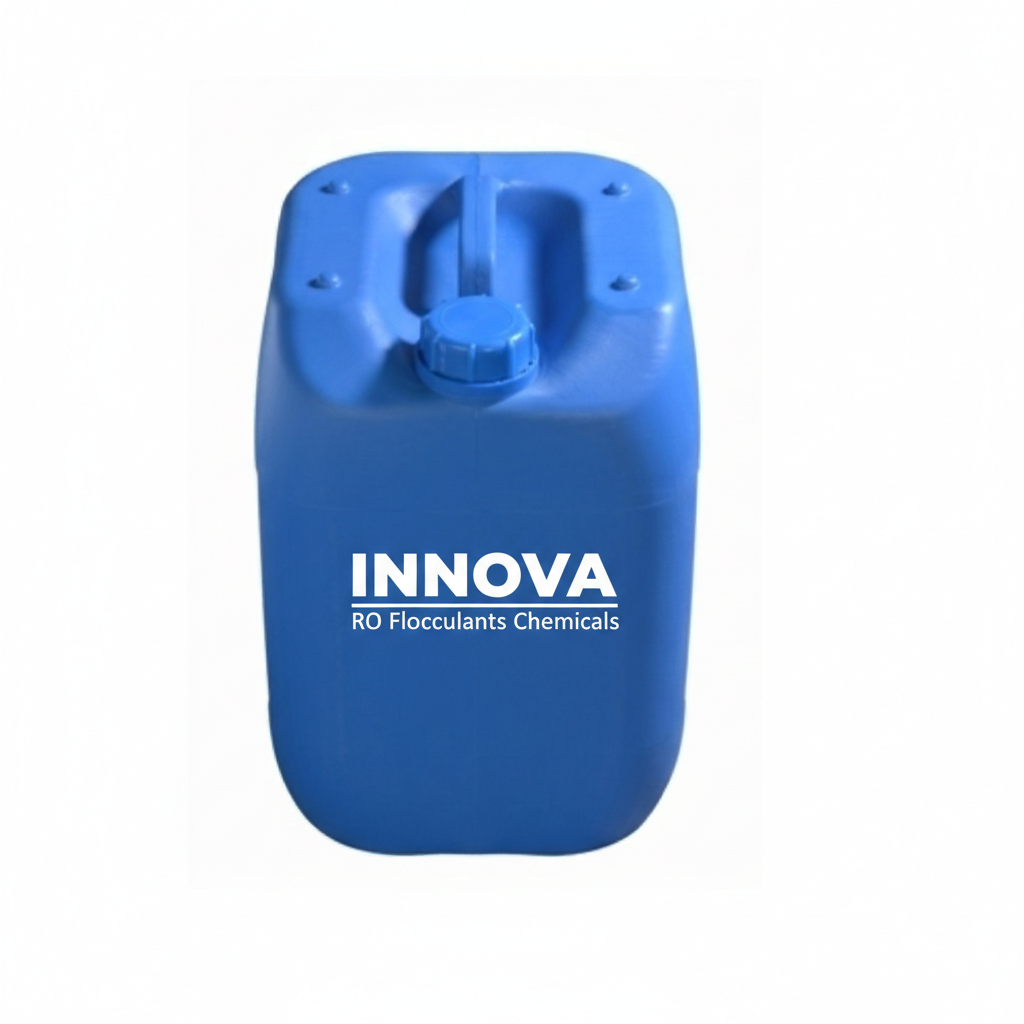
RO Flocculants Chemicals & Liquid Polymer for Myanmar's Industrial Zone & Rural Facility Pretreatment
Innova Corporate (India) is a premier RO flocculants chemicals manufacturer and supplier in Myanmar. We cater to the growing industrial demands of the region, providing high-purity flocculation solutions that meet international quality standards. Our chemicals are specifically designed to handle local water challenges — from the sediment-heavy river sources feeding plants in Thilawa SEZ and Yangon's industrial zones to the iron-rich inland aquifers and remote rural facilities that operate with limited pretreatment infrastructure.
Our RO flocculant in Myanmar is an advanced liquid polymer developed to support the full Innova series of pretreatment and membrane chemicals. It is highly effective in local water conditions, specifically designed to aid the precipitation of suspended solids such as iron oxide, mud, silt and other soft foulants. This versatile chemical is essential for pretreatment in all water types — surface water, groundwater, and municipal supply — ensuring complete compatibility with all modern membrane systems deployed across Myanmar.
Key Features & Benefits for Myanmar Industries:
- Iron & Mud Removal: Highly effective against a wide range of naturally occurring foulants and suspended solids common in Myanmar groundwater — including iron oxide, silt and colloidal clay.
- Rural Facility Ready: Concentrated liquid form is easy to dose accurately using simple metering pumps — suitable for Myanmar facilities with limited automation and chemical-handling infrastructure.
- Membrane Safety: Fully compatible with all types of RO, NF and UF membranes used in Myanmar industrial units — no residual polymer carryover that could foul membranes.
- Ease of Use: Concentrated liquid product that is safe and simple to handle compared to traditional powders — no mixing time, no dust inhalation risk, no caking in storage.
- Filtration Boost: Significantly enhances the performance and efficiency of multi-grade filters, sand filters and cartridge filters — extending filter run times and reducing media replacement frequency.
- SDI Control: Helps in drastically reducing the Silt Density Index (SDI) of the feed water, protecting expensive membranes from the colloidal and particulate fouling that shortens membrane life.
- Monsoon Performance: Handles the wide turbidity range that Myanmar facilities experience through the monsoon cycle — from dry-season clarity to monsoon sediment loading — without requiring reformulation.
- Low Dosage Economics: Highly concentrated formula delivers effective flocculation at low dose rates — keeping chemical costs predictable even for smaller Myanmar plants.
Why Flocculation Matters for Myanmar's Diverse Industrial Landscape
Myanmar's industrial water treatment operations vary widely in scale and setting. Large facilities in Thilawa SEZ and Yangon's industrial zones operate advanced pretreatment with clarifiers, sand filters and cartridge filtration — but the same sediment loads that affect those plants also affect rural facilities, food processing units and small industrial operations outside the main zones that operate with much simpler pretreatment infrastructure. For these smaller and remote facilities, a single, reliable, easy-to-dose flocculant becomes the primary line of defense against membrane fouling. Our liquid polymer is specifically engineered for this operational reality — it works effectively at low dose rates, requires no complex mixing or make-down equipment, and delivers consistent floc formation across the wide range of Myanmar's raw water qualities. Whether you operate a large RO train in Thilawa SEZ or a smaller system at a rural industrial site, this formulation provides the flocculation performance you need with the operational simplicity your facility requires.
Liquid Flocculant Performance: Myanmar Water Source Comparison
| Water Source | Typical Characteristics | Flocculant Response |
|---|---|---|
| Ayeyarwady River (Dry Season) | Moderate turbidity, low sediment load | Standard dose — 2–4 ppm |
| Ayeyarwady River (Monsoon) | High silt and clay loading, turbidity 100–300+ NTU | Increased dose — 4–8 ppm, jar testing recommended |
| Yangon River Source | Tidal influence, variable turbidity | Continuous monitoring — potential dose changes |
| Upper Myanmar Inland Aquifers | Iron-rich, moderate turbidity | Dual-action — iron removal + clarity |
| Delta Region Canals | Agricultural runoff, organic load | Higher dose for organic complex flocs |
| Municipal Supply (Yangon, Mandalay) | Low turbidity, pipe sediment | Low dose — 1–2 ppm |
Case Study: Food Processing Plant in Bago Region
A food processing facility in the Bago region was drawing from a shallow tube well that fed its 15 m³/hr RO system. The well water contained 2.2 ppm dissolved iron and showed turbidity in the 8–15 NTU range through most of the year — but during the monsoon months, turbidity often spiked to over 40 NTU and iron loading increased. The plant was using powder flocculant but faced recurring problems: inconsistent dosing due to manual mixing, occasional over-dosing that caused polymer carryover to the cartridge filters, and accelerated cartridge filter plugging during monsoon. After switching to Innova's liquid flocculant with a simple metering pump setup at 3 ppm dosing (rising to 5 ppm during monsoon), the facility reported cartridge filter life extended from 3 weeks to 9 weeks, consistent SDI below 3 even during monsoon peaks, and zero polymer carryover events. The plant also noted that the liquid form was significantly easier for operators to handle compared to the previous powder mixing routine.
Frequently Asked Questions — RO Flocculants in Myanmar
Q1: How is a liquid flocculant better than powder flocculants for Myanmar plants?
Liquid flocculants offer three key advantages for Myanmar operations: safer handling (no dust
inhalation risk), more precise dosing (accurate pump-based control vs manual scooping), and faster
activation (already in solution, no mixing time or clumping). Powder flocculants still have a place
where logistics strongly favor dry goods or where large-scale make-down systems exist, but for most
Myanmar facilities the liquid form delivers better operational reliability.
Q2: Can the flocculant handle both monsoon and dry-season water in Myanmar?
Yes. The formulation works across the full turbidity range that Myanmar facilities see through the
year — from dry-season clarity to monsoon sediment spikes. The dose rate does need to be adjusted
seasonally — monsoon dosing typically runs 30–60% higher — but the same product works for both. We
recommend jar testing at the start of each season to establish optimal dosing.
Q3: Is this flocculant suitable for small rural facilities in Myanmar?
Yes — the liquid form is specifically designed for ease of handling at facilities with limited
automation. It requires only a basic metering pump and no make-down tank or mixing system, making
it practical for small industrial operations, food processing units, and rural facilities outside
the main industrial zones.
Q4: Do you supply RO flocculants across Myanmar?
Yes. We supply across Myanmar through Yangon Port with delivery to Thilawa SEZ, Yangon industrial
zones (Hlaing Tharyar, Shwe Pyi Thar, South Dagon), Mandalay Industrial Zone, Naypyidaw and other
industrial areas. Standard packaging of 25 kg, 250 kg and bulk drums is available with regular
dispatch from India.
Expert Support in Myanmar: Proper flocculation is the first line of defense for protecting downstream membranes. Contact our technical team for precise dosing guidelines and comprehensive water analysis for your Myanmar-based plant. We provide free jar-testing guidance, seasonal dosing adjustments and ongoing support to keep your pretreatment performing at its best throughout the year.