- 2B / BW Shalimar Bagh, Opp. BQ Market, Near DLF Mall New Delhi - 110088, India.
- :+91-9312-871-070

Manufacturers, Exporters, Suppliers of RO Dechlorination Chemicals
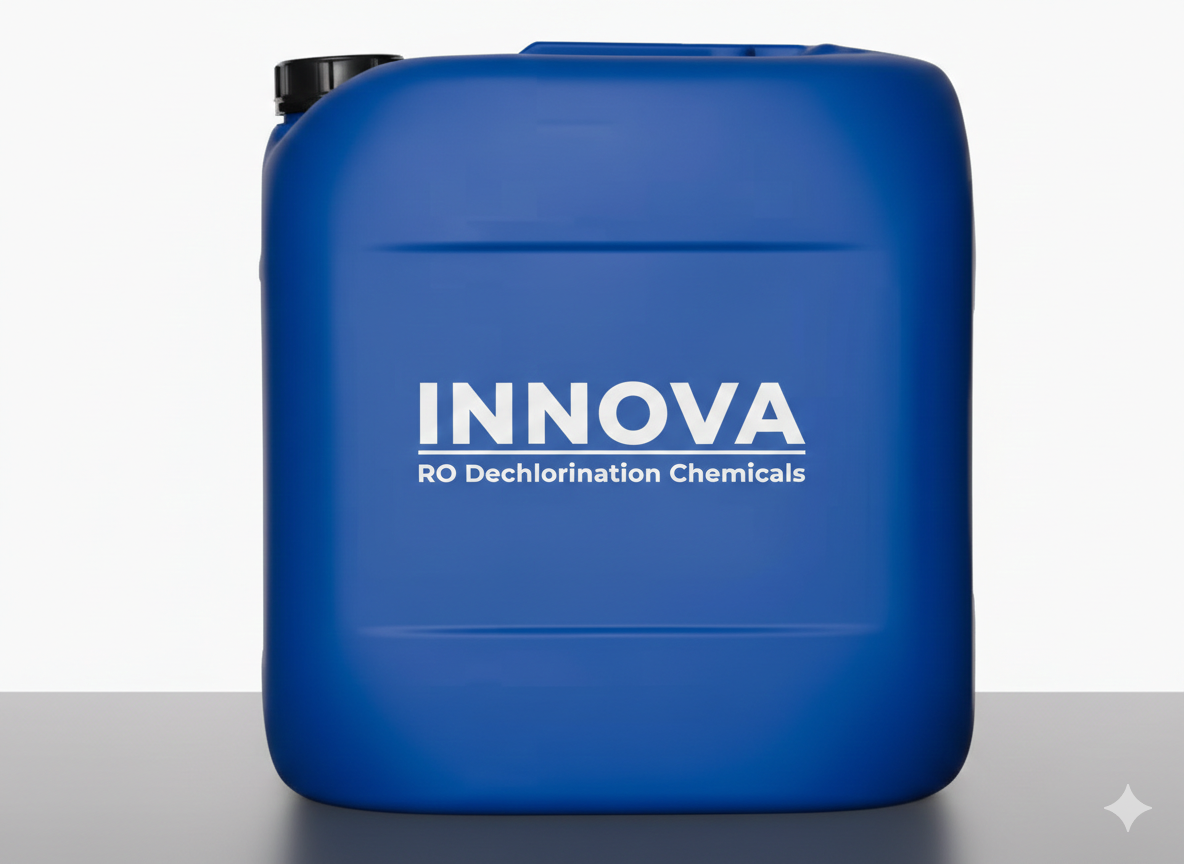
RO Dechlorination Chemicals in Oman for SWRO, Refinery & Municipal RO Feed Water (Sodium Bisulfite-Based Chlorine Neutralizer)
Innova Corporate (India) supplies RO Dechlorination Chemicals in Oman for SWRO desalination plants in Muscat and Barka, refinery boiler feed RO systems in Sohar, and municipal drinking water RO plants in Salalah and Nizwa. Residual chlorine in RO feed water causes irreversible oxidation damage to Thin Film Composite (TFC) and Polyamide membranes — it destroys salt rejection, increases permeate conductivity and shortens membrane life by years. Our sodium bisulfite-based liquid dechlorinator rapidly neutralises free chlorine and chloramines in the feed stream, ensuring complete membrane safety and operational longevity for Omani plants.
Oman SWRO plants in Muscat and Barka use chlorine-based pre-treatment to control algae and biofouling in seawater intake systems. Refineries in Sohar dose chlorine in cooling water and boiler feed pre-treatment. Municipal RO plants in Salalah and Nizwa chlorinate feed water for disinfection. In every case, residual chlorine must be neutralised before it reaches the RO membranes — this is where dechlorination chemicals are essential. Our concentrated, stabilised liquid formula is dosed into the feed water after the media filter and before the cartridge filter, protecting membranes from chlorine attack.
Key Features & Strategic Benefits for Oman RO Plants:
- Rapid Chlorine Neutralisation: Stabilised liquid formula acts in seconds to neutralise free chlorine and chloramines in Oman feed water before they reach the membranes.
- Critical Membrane Protection: Guards Polyamide and TFC membranes against oxidative degradation and chemical "burning" in Muscat, Sohar and Salalah RO systems.
- Liquid Precision Dosing: Unlike conventional powders, our liquid formula is easy to handle, store and dose with high accuracy using standard metering pumps at Omani plants.
- Enhanced Stability: Significantly more stable and effective than traditional sodium bisulfite solutions — longer shelf life and consistent performance.
- ORP-Compatible: Designed to bring ORP below 200 mV before the membranes, meeting industry monitoring standards used in Oman SWRO and refinery RO systems.
- System Longevity: Prevents premature membrane replacement cost by shielding against chlorine attack — extends membrane life by years in Omani plants.
Industries We Serve Across Oman:
SWRO Desalination (Muscat, Barka): Seawater RO plants use chlorine for algae control in intake systems and rely on dechlorination chemicals to protect membranes before the first pass.
Oil & Gas Refineries (Sohar): Refinery boiler feed and cooling water RO systems use dechlorination chemicals to neutralise chlorine from pre-treatment.
Power Generation Plants: Cooling tower make-up and boiler feed RO trains across Oman use dechlorination chemicals for consistent chlorine control at high temperatures.
Municipal Drinking Water (Salalah, Nizwa): Community RO plants use food-grade dechlorination chemicals to protect membranes after chlorine disinfection.
Industrial Process Water (Duqm): Mining and heavy industrial RO systems use dechlorination chemicals to prevent membrane oxidation in high-chlorine feed water.
Why Dechlorination Matters — Chlorine Damage to RO Membranes:
| Parameter | Without Dechlorination | With Dechlorination |
|---|---|---|
| Membrane Surface | Oxidised, degraded | Protected, intact |
| Salt Rejection | Drops rapidly | Maintained at design level |
| Permeate Conductivity | Rises, water quality drops | Stable |
| Membrane Life | Reduced by 50% or more | Full design life |
Application & Dosage Guidelines for Oman RO Plants:
Dosage depends on residual chlorine level, chloramine presence and contact time. Typical dosage for Oman plants ranges from 1.5 to 3 ppm sodium bisulfite per ppm of chlorine, or approximately 3–15 ppm in feed water.
- Injection Point: Dose after media filter and before cartridge filter, as close to the RO membranes as possible.
- High Chlorine Strategy: If free chlorine is high, dose dechlorinator before antiscalant injection, as chlorine can neutralise antiscalant effectiveness.
- Safe Mixing: Avoid mixing neat dechlorinator and antiscalant directly — space dosing points at least 3–5 meters apart in Oman plant piping.
- Monitoring: Track ORP continuously and target below 200 mV before membranes. Alternatively, use a DPD chlorine test kit to confirm free chlorine below 0.05 ppm.
Common Chlorine Problems in Oman RO Systems:
Membrane Oxidation: Residual chlorine attacks polyamide membranes, causing irreversible loss of salt rejection. Common in SWRO plants in Muscat and Barka using pre-chlorination.
Antiscalant Neutralisation: Chlorine reacts with antiscalant chemicals and reduces their effectiveness, leading to scale formation. Dose dechlorination first.
Chloramine Formation: When ammonia is present in feed water, chlorine forms chloramines that are harder to neutralise. Higher dechlorination dosage is required.
ORP Spike: Sudden chlorine breakthrough raises ORP above 200 mV and can damage membranes within hours. Continuous monitoring is critical in Oman plants.
Technical Specifications:
| Appearance | Clear to pale yellow liquid |
| Active Ingredient | Sodium bisulfite (stabilised) |
| pH (as is) | 3.5 – 5.0 |
| Specific Gravity | 1.20 – 1.35 |
| Recommended Dosage | 3 – 15 ppm in feed water (based on chlorine level) |
| Solubility | Fully miscible in water |
| Shelf Life | 12 months in original sealed container |
Handling & Safety Measures:
Always wear proper safety gear, including splash goggles, lab coats, gloves and vapor respirators. In case of skin contact, wash immediately with plenty of water. Store in original containers in a cool, dry place at your Oman facility, away from direct sunlight and heat sources. Avoid contact with strong oxidisers and acids during storage.
Frequently Asked Questions (Oman):
Q: What are RO dechlorination chemicals used for in Oman?
A: They neutralise residual chlorine in RO feed water before it reaches polyamide or TFC membranes. Chlorine is used in pre-treatment for algae and bacteria control, but if it carries over to the membranes, it causes irreversible oxidation damage.
Q: Why is dechlorination critical for Oman SWRO desalination plants?
A: Oman SWRO plants in Muscat, Barka and Sohar use chlorine-based pre-treatment for algae control in seawater intake. Without dechlorination, residual chlorine oxidises membranes and destroys salt rejection.
Q: Which chemical is used for RO dechlorination in Oman?
A: Sodium bisulfite (SBS) is the most common chemical. It reacts rapidly with free chlorine and chloramines to form harmless sulfate and chloride. Our dechlorination chemicals are sodium bisulfite-based.
Q: How is dechlorination chemical dosed in Oman RO systems?
A: It is dosed into the feed water after the media filter and before the cartridge filter, using a metering pump. Typical dosage is 1.5 to 3 ppm of sodium bisulfite per ppm of chlorine.
Q: How do I monitor dechlorination effectiveness in Oman plants?
A: Monitor ORP continuously and target below 200 mV before the membranes. Alternatively, use a DPD chlorine test kit to confirm free chlorine is below 0.05 ppm.
Q: Do you supply dechlorination chemicals across Oman industrial cities?
A: Yes, we supply to SWRO, refinery, power plant and municipal RO plants across Oman, including Muscat, Barka, Sohar, Salalah, Duqm, Nizwa and Sur.
*Note: As a company policy, Innova Corporate recommends consulting our service engineers in Oman for precise dosage requirements based on your specific water chemistry and chlorine levels.
Related Products: Explore our Complete RO Antiscalant Range for Oman, Liquid RO Antiscalant Chemicals, and RO Disinfectant Chemicals for a complete RO chemical programme across Oman.