- 2B / BW Shalimar Bagh, Opp. BQ Market, Near DLF Mall New Delhi - 110088, India.
- :+91-9312-871-070

Manufacturers, Exporters, Suppliers of RO Membrane Disinfectant Biocide
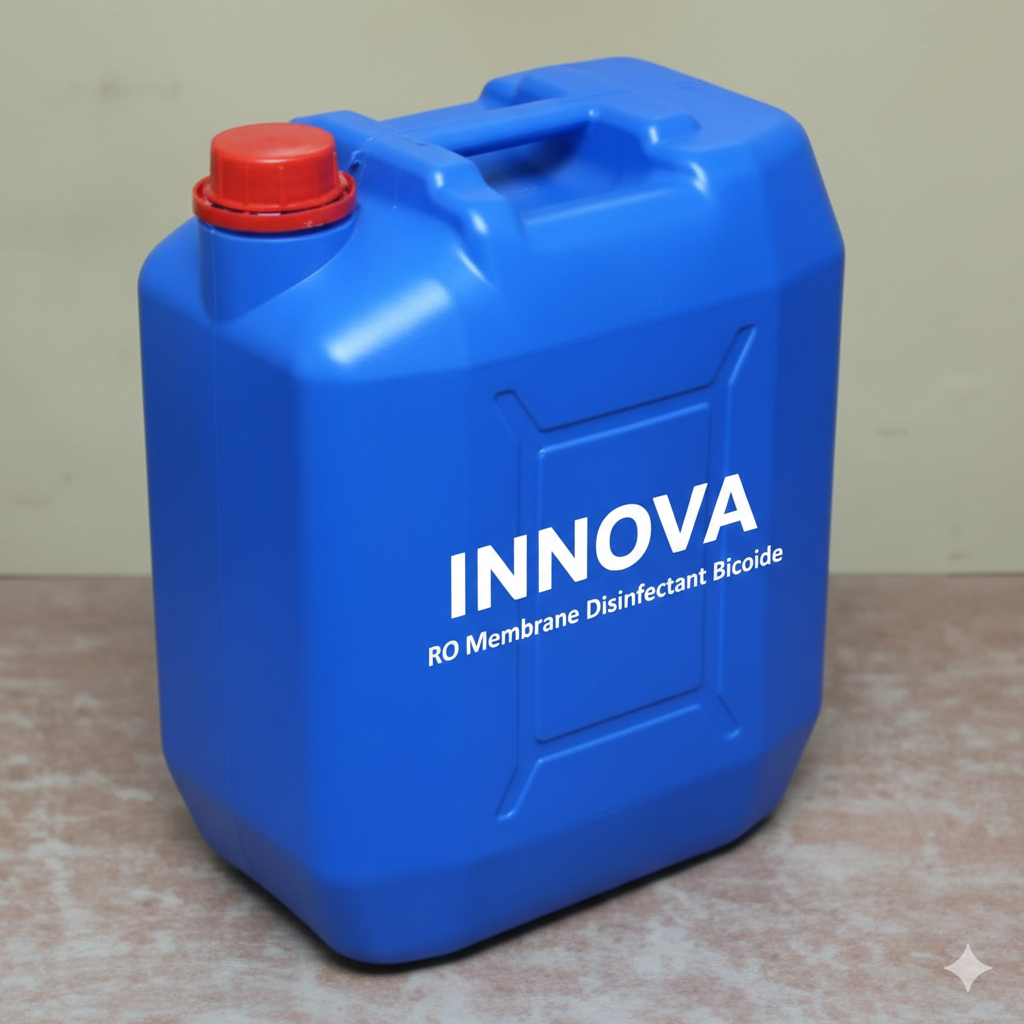
RO Membrane Disinfectant & Biocide Solutions for Oman's Food, Pharma & Industrial RO Plants
Innova Corporate (India) manufactures a comprehensive range of RO membrane disinfectant biocides in Oman designed to eliminate biofilm-forming microorganisms before they compromise membrane performance. Biological fouling is the single most underestimated problem in Omani RO operations — it develops silently, resists standard CIP chemistry, and returns within weeks of cleaning if the root cause is not addressed. Our biocide portfolio solves this by providing continuous microbial control at the source: feed water, membrane surface, and post-treatment storage systems across the Sultanate.
We supply three distinct biocide technologies tailored to different Oman applications: Non-Oxidizing Biocides for continuous membrane protection in SWRO plants at Sohar, Duqm and Barka; Silver Hydrogen Peroxide formulations for potable water systems at hotels, hospitals and labor camps in Muscat and the Interior; and Peracetic Acid chemistries for food processing, breweries and pharmaceutical facilities in Salalah Free Zone and Sohar Free Zone where sanitization standards are strictest. Each formulation is selected based on the specific microbial challenge and regulatory requirements of the customer's Oman operations.
Continuous use of these biocides prevents the classic signs of biofouling that Oman plant operators know too well — creeping increases in differential pressure across pressure vessels, gradual permeate flow decline, rising energy consumption per cubic meter produced, and occasional excursions in permeate quality during high-biological-activity periods. Addressing biofouling at the chemical level, before it requires membrane replacement, is the single most cost-effective maintenance decision any Oman RO plant can make.
Specialized Biocide Range for Oman Industries:
- Standard RO Disinfectants
- High-Efficacy Membrane Biocides
- Advanced RO Antifoulants
- Silver Hydrogen Peroxide Based
- Peracetic Acid Formulations
- Potable Drinking Water Disinfectants
- Non-Oxidizing Biocides for SWRO
- Biofilm Removers for Industrial RO
Non-Oxidizing Chemistry: The Only Safe Choice for Oman TFC Membranes
Chlorine and other oxidizing biocides deliver effective microbial kill but attack polyamide and TFC membrane surfaces — a problem that is often invisible until membranes fail salt rejection testing. For Oman's SWRO plants running modern TFC elements, non-oxidizing biocides are essentially the only safe choice for continuous biological control. Our formulations kill bacteria, fungi, algae, and sulfate-reducing organisms through a mechanism that leaves the membrane's active layer intact. A major operational benefit for Omani facilities is the possibility of reducing or eliminating chlorination and dechlorination steps in feed water pretreatment — simplifying plant design, cutting chemical costs, and removing the sodium bisulfite dosing that many plants currently maintain downstream of chlorination.
Biocide Selection Guide for Oman Applications
| Application | Recommended Biocide | Typical Dose (Oman) |
|---|---|---|
| SWRO Continuous Protection (Sohar, Duqm) | Non-Oxidizing Biocide | 1 – 5 ppm continuous |
| Potable Water (Muscat Hotels, Labor Camps) | Silver Hydrogen Peroxide | 5 – 20 ppm in storage tanks |
| Food & Beverage CIP (Salalah Free Zone) | Peracetic Acid Formulation | 100 – 2000 ppm CIP |
| Pharmaceutical RO (Sohar, Muscat) | Peracetic Acid / Silver H₂O₂ | As per validation protocol |
| Industrial RO Shock Treatment | High-Efficacy Membrane Biocide | 50 – 200 ppm shock |
| Brewery / Beverage RO | Peracetic Acid Formulation | 100 – 500 ppm CIP |
Case Study: Pharmaceutical RO Facility in Sohar Free Zone
A pharmaceutical manufacturing plant in Sohar Free Zone operating a 15 m³/hr RO unit for purified water production was experiencing recurring biofilm-related deviations in its microbiological monitoring program. Even with quarterly CIP using standard caustic and acid cleaners, heterotrophic plate counts (HPC) in the RO permeate occasionally exceeded internal alert limits — a critical issue in regulated pharmaceutical production. The facility switched to Innova's non-oxidizing biocide for continuous feed-side dosing at 3 ppm. Over the next 12 months, HPC counts remained consistently below alert limits, CIP frequency was reduced from quarterly to semi-annual, and the plant passed its annual customer audit with zero microbiological findings. The facility now considers biocide dosing a mandatory part of its purified water system operation.
Frequently Asked Questions — RO Membrane Biocide in Oman
Q1: How do I know if my Oman RO plant has a biofouling problem?
The classic signs are: rising differential pressure across pressure vessels between CIPs,
declining normalized permeate flow, and stable-but-slowly-degrading salt rejection. In Oman
specifically, biofouling is more likely during summer months, during algae bloom periods in
Gulf waters, and at plants using surface water or seawater intake without adequate
pretreatment. A membrane autopsy or feed water microbial analysis can confirm the diagnosis.
Q2: Can I switch from chlorination to non-oxidizing biocide in my Oman plant?
Yes, and many Oman plants have already done so. The switch typically involves removing the
chlorination step upstream and the sodium bisulfite dechlorination step downstream, then
dosing non-oxidizing biocide directly into the RO feed after pretreatment. This simplifies
plant operations, reduces chemical consumption, and eliminates the risk of chlorine
breakthrough damaging TFC membranes. Our team provides free transition guidance for Oman
facilities.
Q3: Which biocide is right for my Oman application?
It depends on three factors: what the treated water is used for, which membranes are installed,
and what microbial profile the feed water presents. For SWRO continuous protection, non-oxidizing
biocide is standard. For potable water, silver hydrogen peroxide is ideal. For food, beverage
and pharmaceutical CIP, peracetic acid is preferred. Our Oman technical team reviews your
application and recommends the correct chemistry.
Q4: Do you supply RO membrane biocides across Oman?
Yes. We supply across Oman including Muscat, Barka, Sohar, Duqm, Salalah, Nizwa, Sur, Ibri and
all major industrial zones. Standard packaging of 25 kg, 250 kg, and 1000 kg IBC is available
with regular dispatch from India to Omani ports. Bulk pricing and technical support are
available for multi-site operators.